
Bhutan Travel: Explore 3 Sacred Cities to Find Peace
Bhutan is never in a hurry. This small country hidden behind the majestic Himalayas measures happiness by the GNH index - Gross National Happiness - instead of GDP. With less than 800,000 people and a "high-value, low-impact tourism" policy, Bhutan limits the number of visitors each year, making each trip a true privilege. If you are looking for one Spiritual Bhutan tour To purify your soul, the three cities of Thimphu - Punakha - Paro are the journey you need.
1. Capital Thimphu
Thimphu is the only capital in the world without traffic lights, a fact not because of lack of infrastructure, but because Bhutanese choose not to. Instead, policemen wearing traditional uniforms direct traffic by hand, as gracefully as a dance. The pace of life here is slow, intentional and full of awareness.
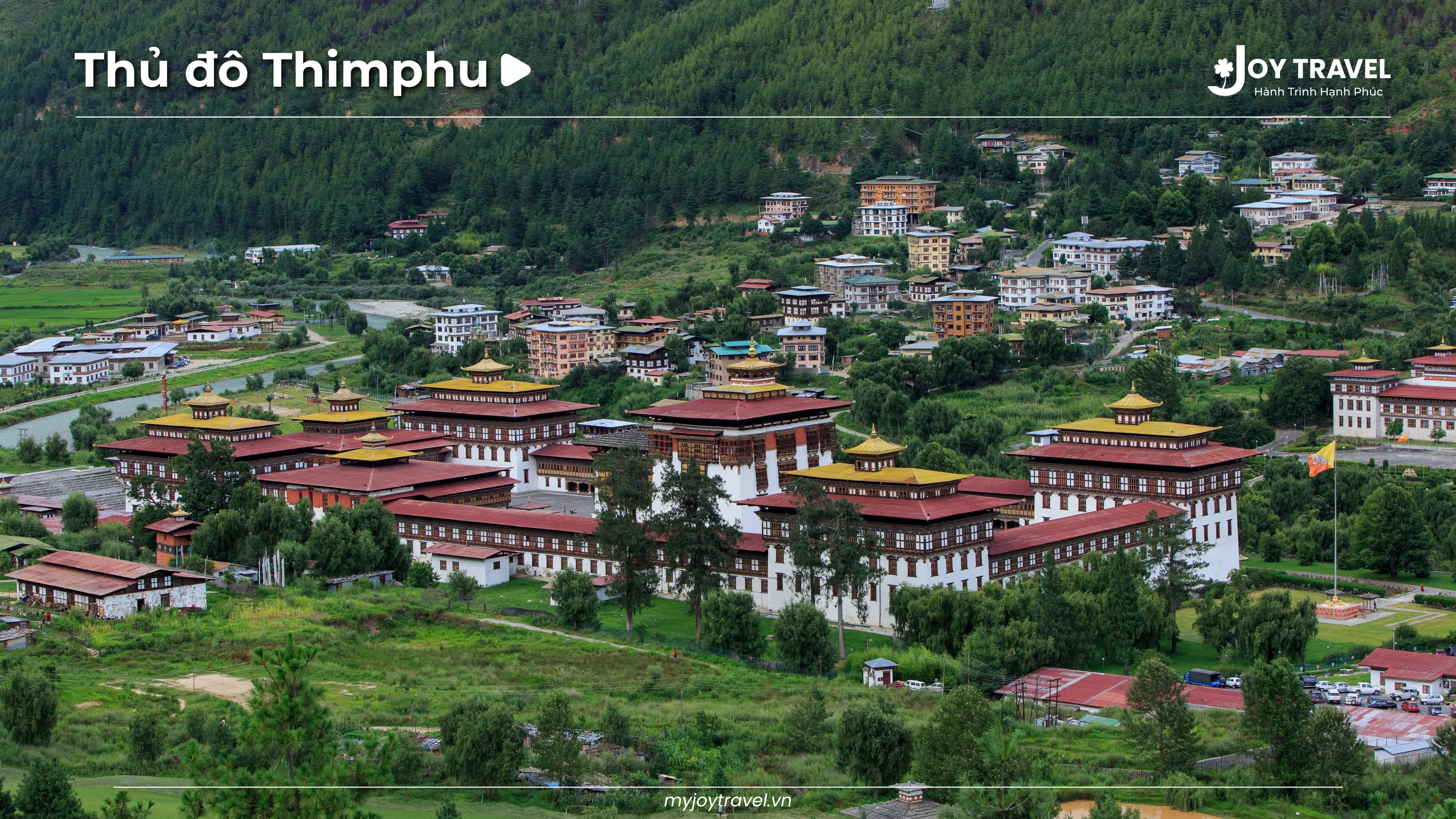
Thimphu, the spiritual and peaceful capital of Bhutan
Great Buddha Dordenma statue
Located on the top of Kuensel Phodrang hill overlooking the entire valley, Buddha Dordenma statue 51.5 meters high, cast from brass and plated with gold, containing more than 125,000 small Buddha statues inside. The project was completed in 2015 to celebrate the 60th anniversary of the fourth King's birth. Standing at the foot of the statue at dawn, when the first golden light touches the bronze surface, you will understand why the Bhutanese call this a place where "the mind is at peace, the world is at peace".
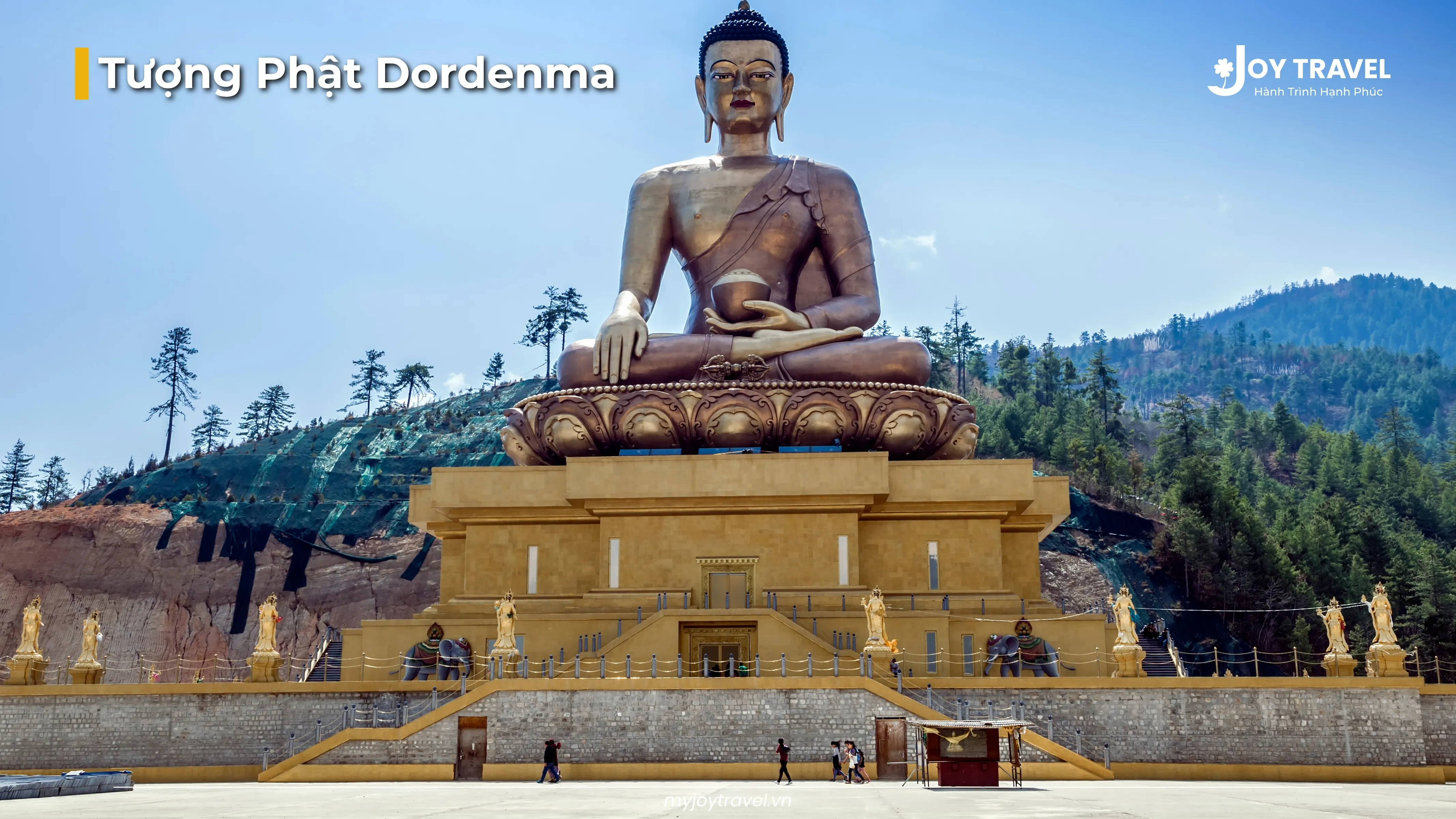
The 51.5 meter high Dordenma Buddha statue in Thimphu
Memorial Chorten & Tashichho Dzong
Memorial Chorten was built in 1974 to commemorate the third King (the king loved by the people as a living Buddha). Every early morning, hundreds of young and old people voluntarily circumambulate the stupa, rolling rosaries and chanting sutras. The murmur of prayers mixed with the smoke of incense creates an unmistakable atmosphere.
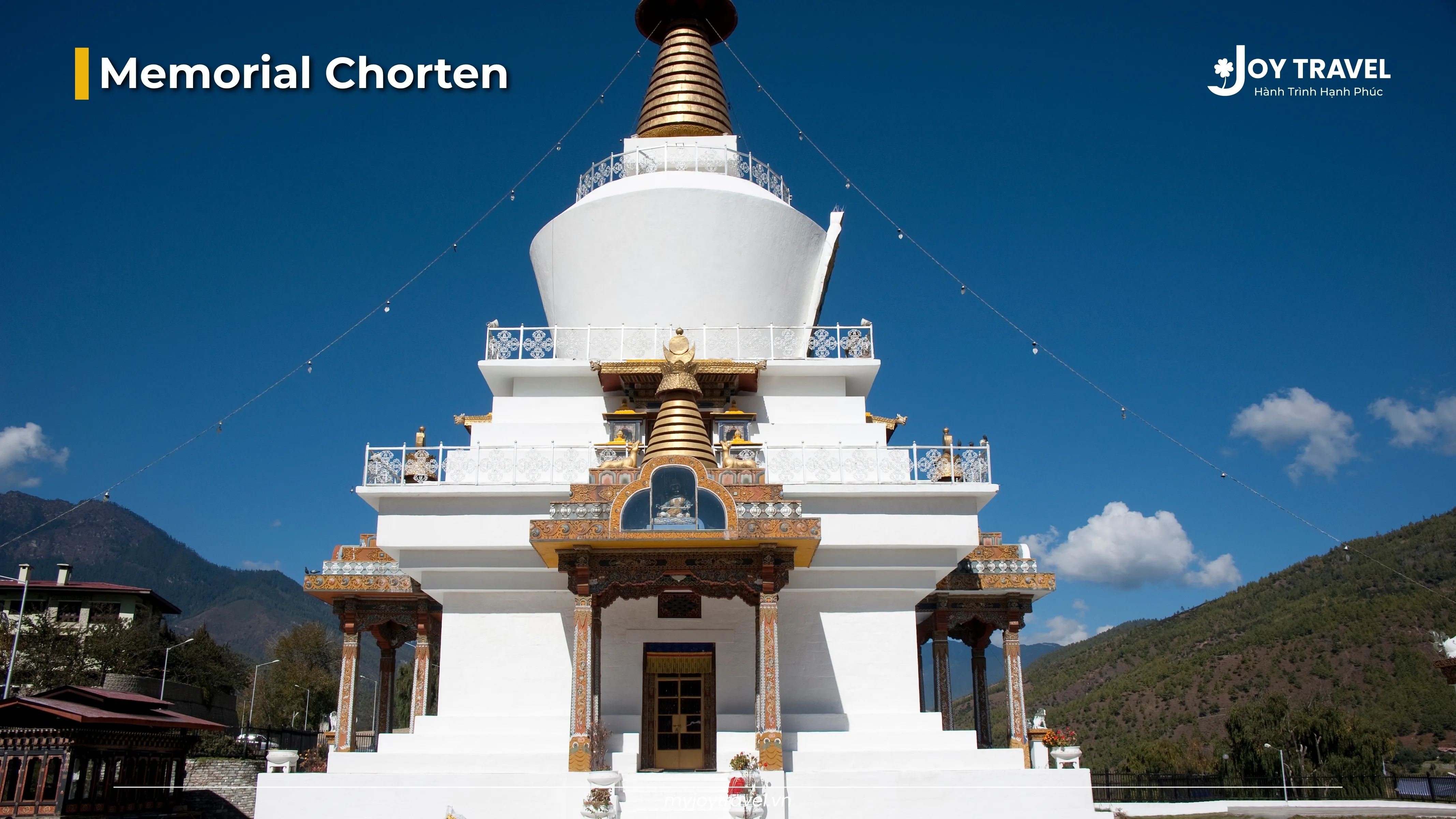
The sacred Memorial Chorten
Not far away, Tashichho Dzong, an imposing white fortress on the banks of the Wang Chhu River that serves as both a government headquarters and a Buddhist monastery. This is the clearest embodiment of Bhutanese philosophy: politics and spirituality are not separate, but blended into one.
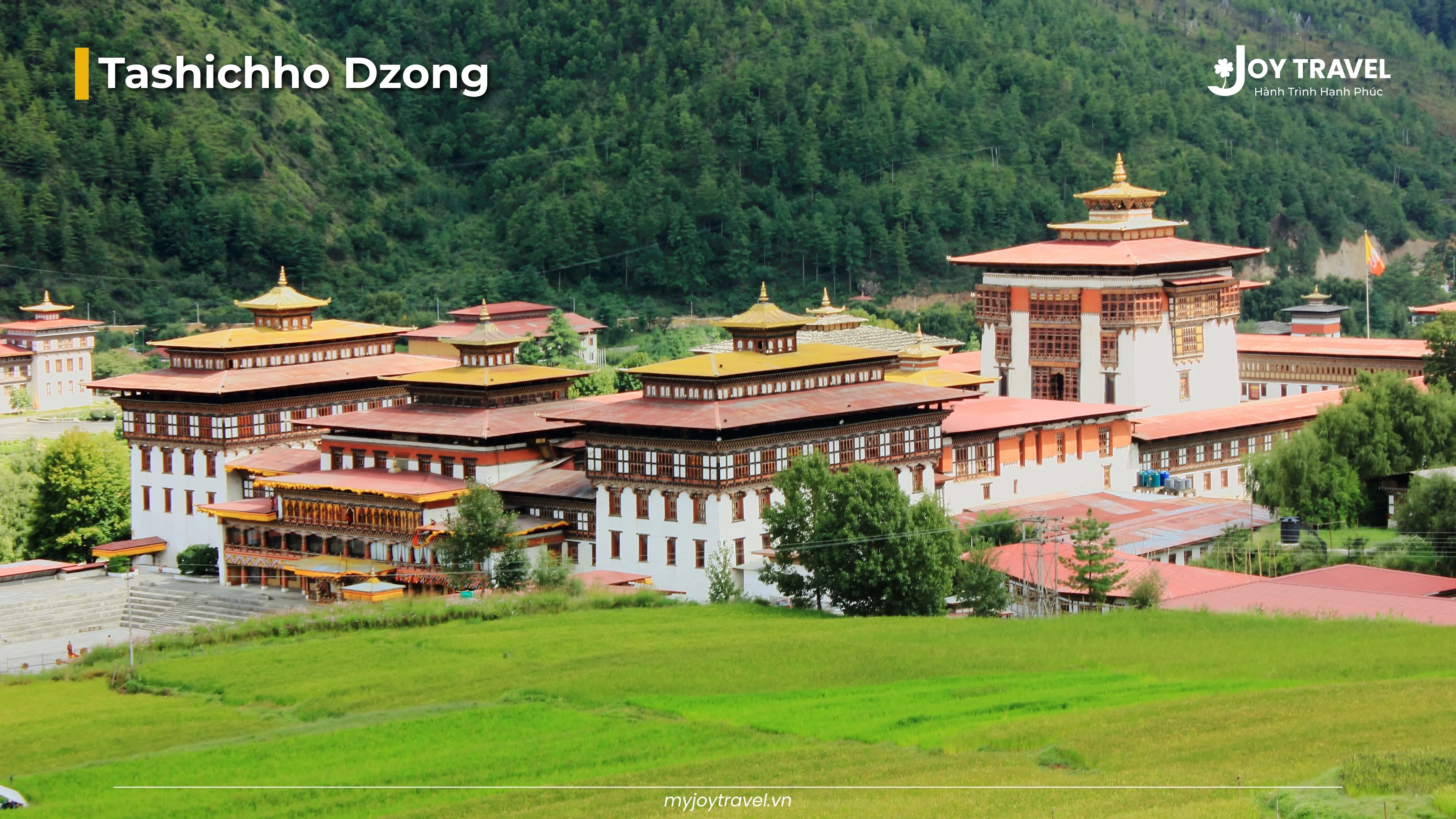
Tashichho Dzong Fort, where politics and spirituality become one
Travel notes: Tashichho Dzong is open to visitors in the evenings (after 5pm) and on weekends. You should wear polite clothes, covering your shoulders and knees when entering the monastery area.
2. Ancient capital Punakha
From Thimphu, journey Bhutan travel takes you over Dochula Pass at an altitude of 3,100m. If the weather is nice, you'll see 108 Druk Wangyal stupas lined up in front of the pure white backdrop of the Himalayas - one of the most breathtaking landscapes in Bhutan. 108 is a sacred number in Buddhism, symbolizing 108 afflictions that people need to overcome.
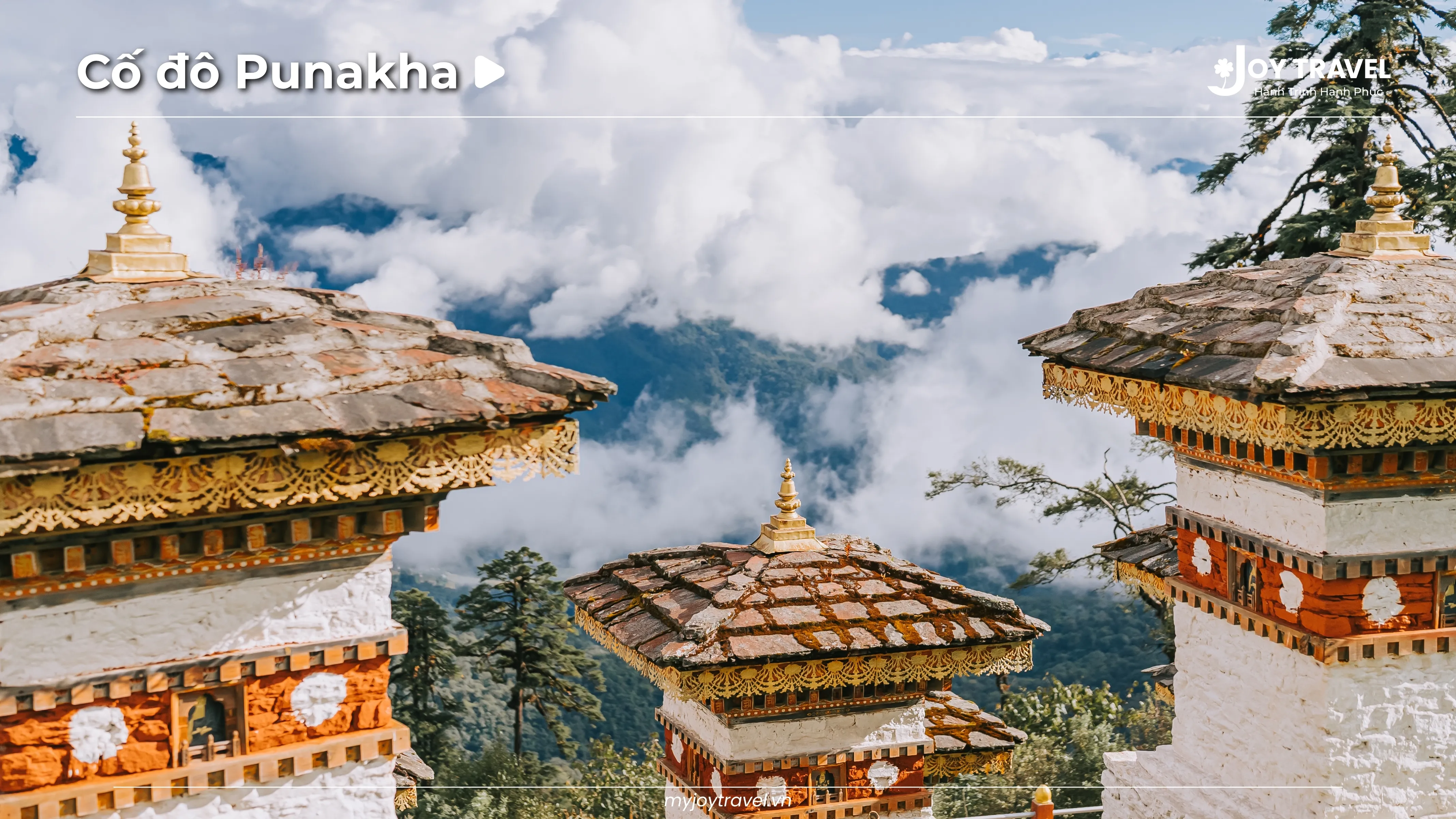
The sacred thousand-year-old ancient capital of Punakha in the heart of Bhutan
Punakha Dzong – The most beautiful architecture in Bhutan
Punakha Dzong It was built in 1637 at the confluence of the Pho Chhu (Father River) and Mo Chhu (Mother River). This is not only a great ancient architectural work but also a place to keep the relics of Zhabdrung Ngawang Namgyal - the founder of the unified country of Bhutan. Every spring, the Punakha Tshechu festival takes place brilliantly right in the dzong yard with traditional dances, attracting thousands of monks, nuns and Buddhists from across the country.
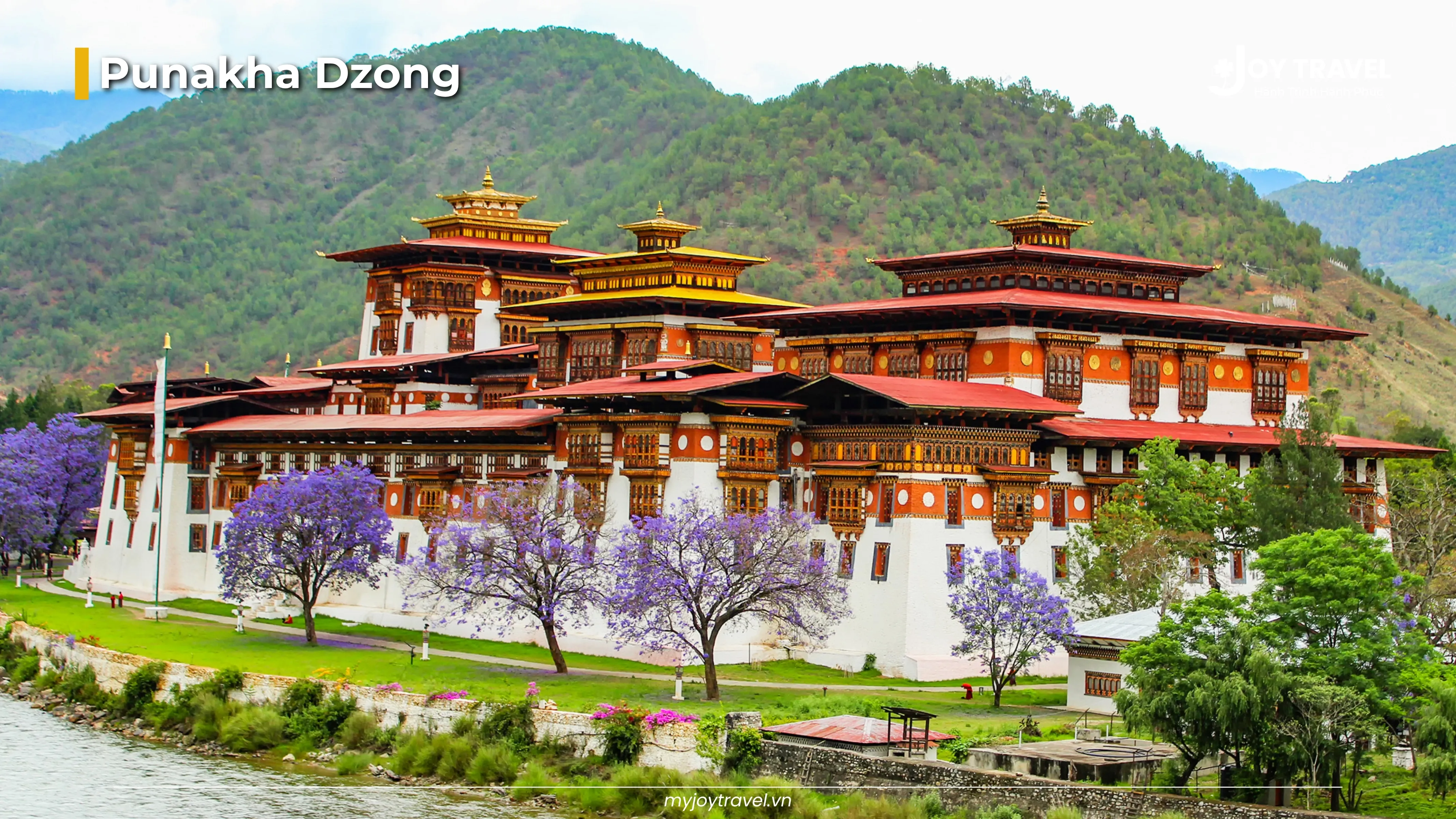
Punakha Dzong is located at the convergence of the Father and Mother rivers
Khamsum Yulley Namgyal Temple
From the riverbank, you walk about 45 minutes through green rice fields to reach this small temple. Built by the Queen Mother with the purpose of praying for world peace, Khamsum Yulley Namgyal Pagoda is not as famous as Tiger's Nest, but because of that, it maintains rare tranquility and purity. Standing from here looking down at the Punakha valley spreading out in the golden afternoon is a moment that needs no words to describe.
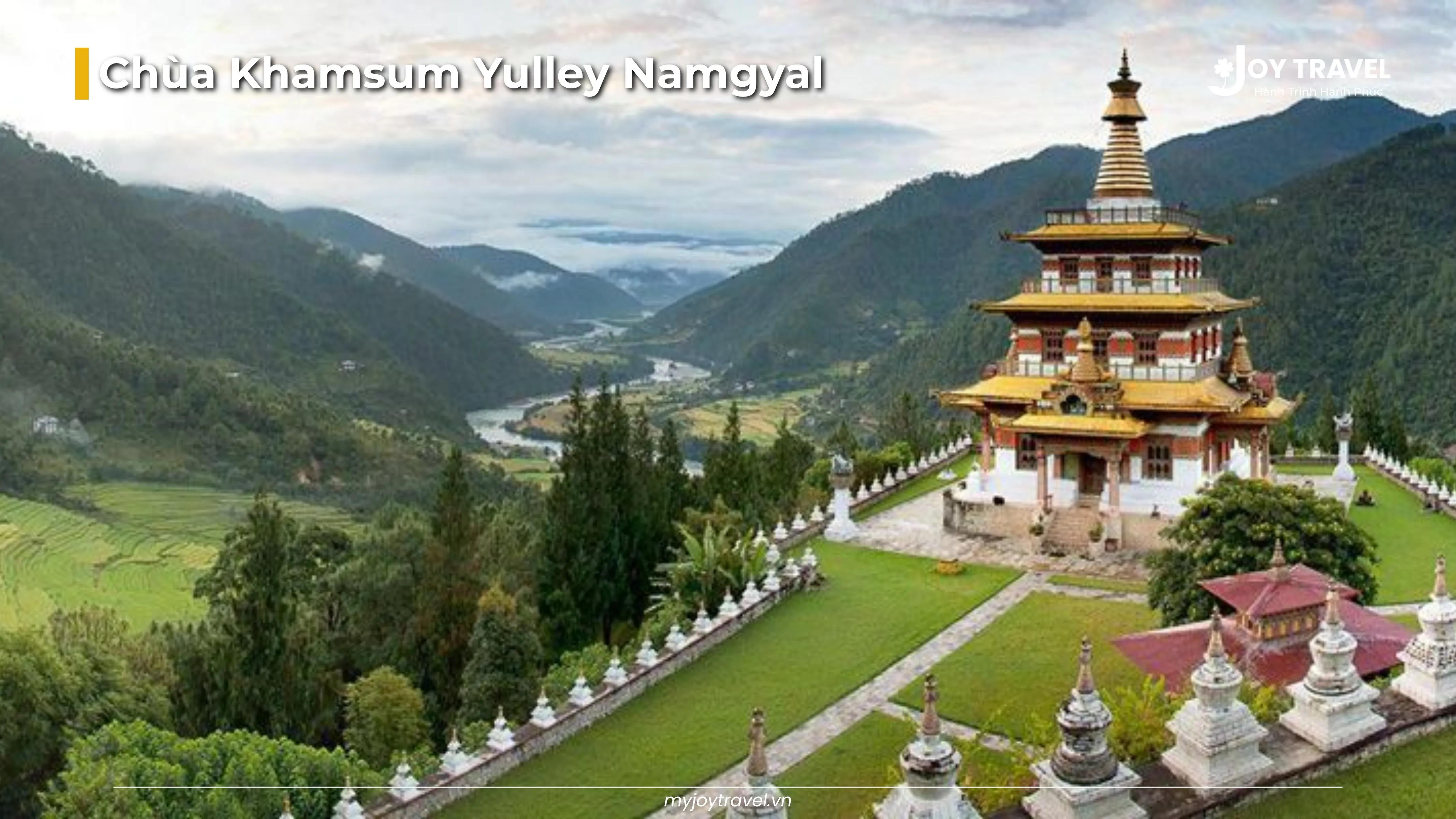
Khamsum Yulley Namgyal Pagoda overlooking the Punakha valley
3. Paro Valley
Paro is the only gateway to enter Bhutan by air. Paro airport is located between two mountain ranges, only about 20 pilots in the world are licensed to land here. From the first moment you set foot down, you understand Bhutan doesn't want getting here to be easy.
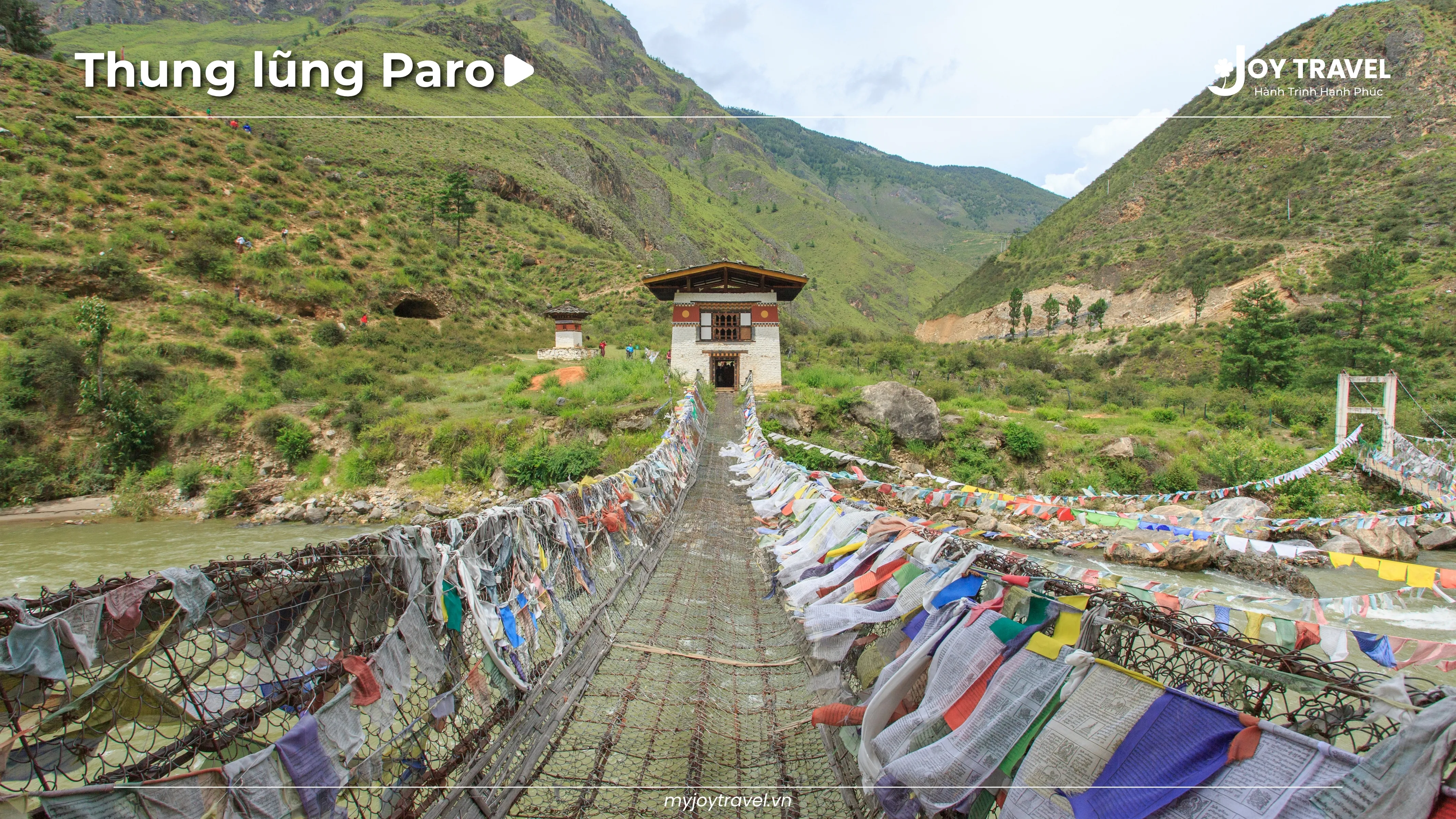
The sacred Paro Valley contains the immortal legend of Bhutan
Taktsang Monastery – Tiger's Nest
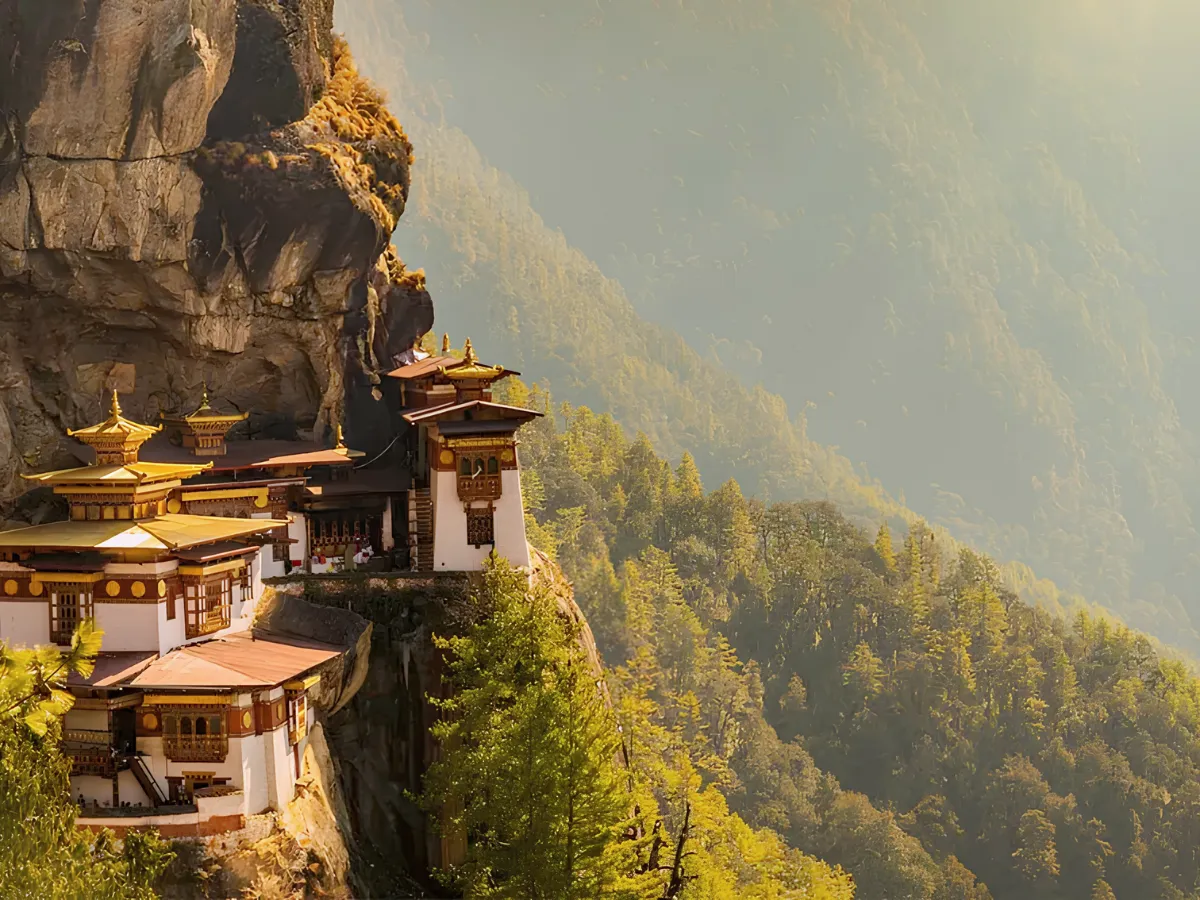
Clinging on a steep cliff 900m above the valley, Taktsang monastery is the most iconic image of Bhutan and the most important pilgrimage site of Tantric Buddhism. According to legend, in the 8th century, Guru Rinpoche rode a tiger incarnation to this cliff and meditated for 3 years, 3 months and 3 days to subdue evil spirits and bring Buddha Dharma to the land of Bhutan.
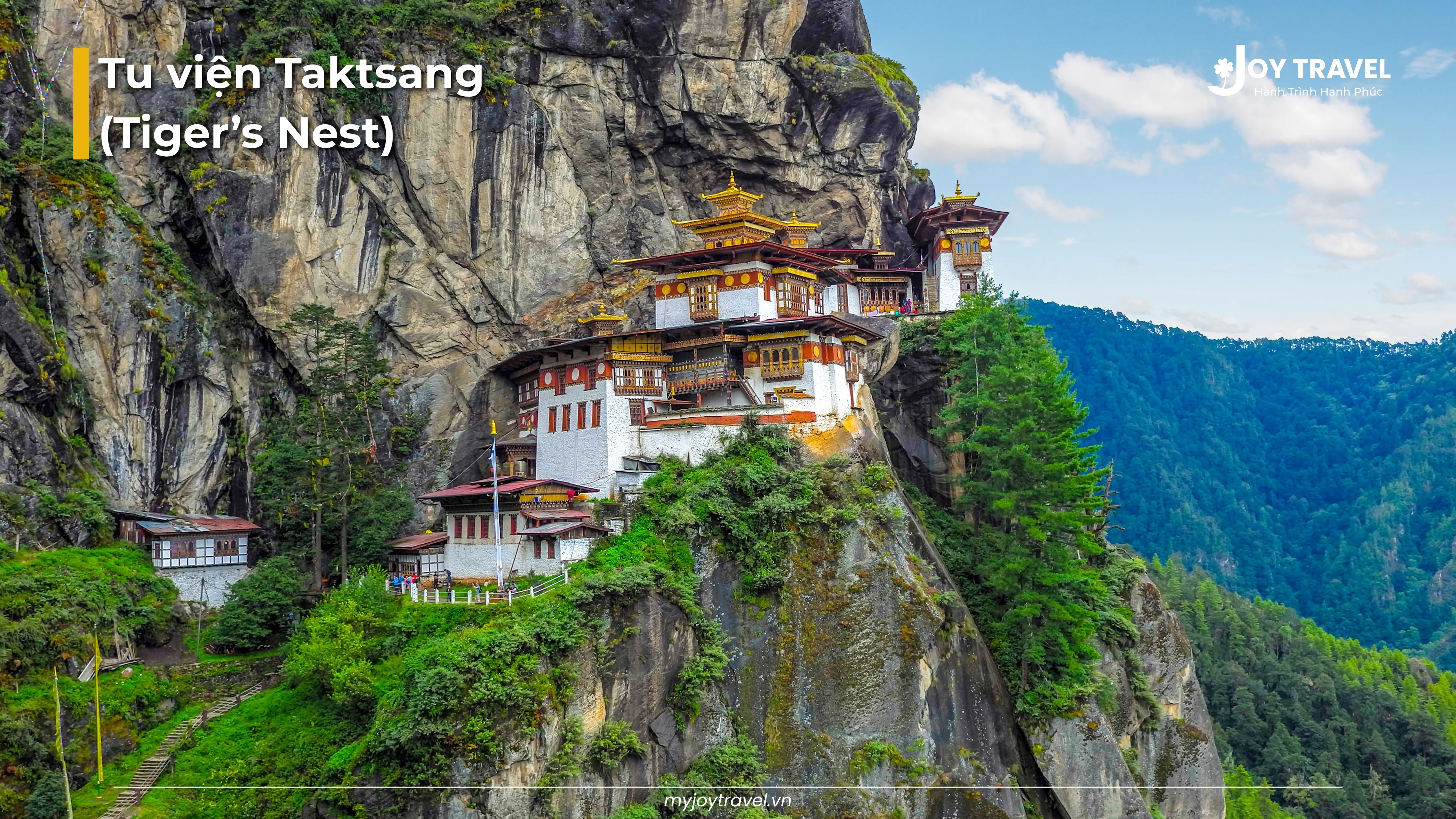
Taktsang (Tiger's Nest) Monastery hangs on a 900m cliff in Paro
The climbing journey to Tiger's Nest takes about 2–3 hours each way, passing through ancient pine forests filled with five-colored flags. This is not simply a physical exercise, many tourists share that while climbing, they begin to gradually let go of the heavy thoughts they brought with them from home. When we arrived, the fatigue disappeared, leaving only a strange sense of respect and relief.
Practical note: You should leave before 8am to avoid the sun and crowds. Large bags are not allowed inside the monastery. Rent a horse for the first half of the journey if needed - completely normal.
Rinpung Dzong & National Museum
Back in the valley, Rinpung Dzon, a 17th-century fortress on a hill overlooking the Paro River, and the National Museum just above will tell you the entire spiritual history of Bhutan through Thangka paintings, bronze statues and ancient weapons. The museum is housed in a round watchtower dating from the 17th century, one of the most unique structures in this country.
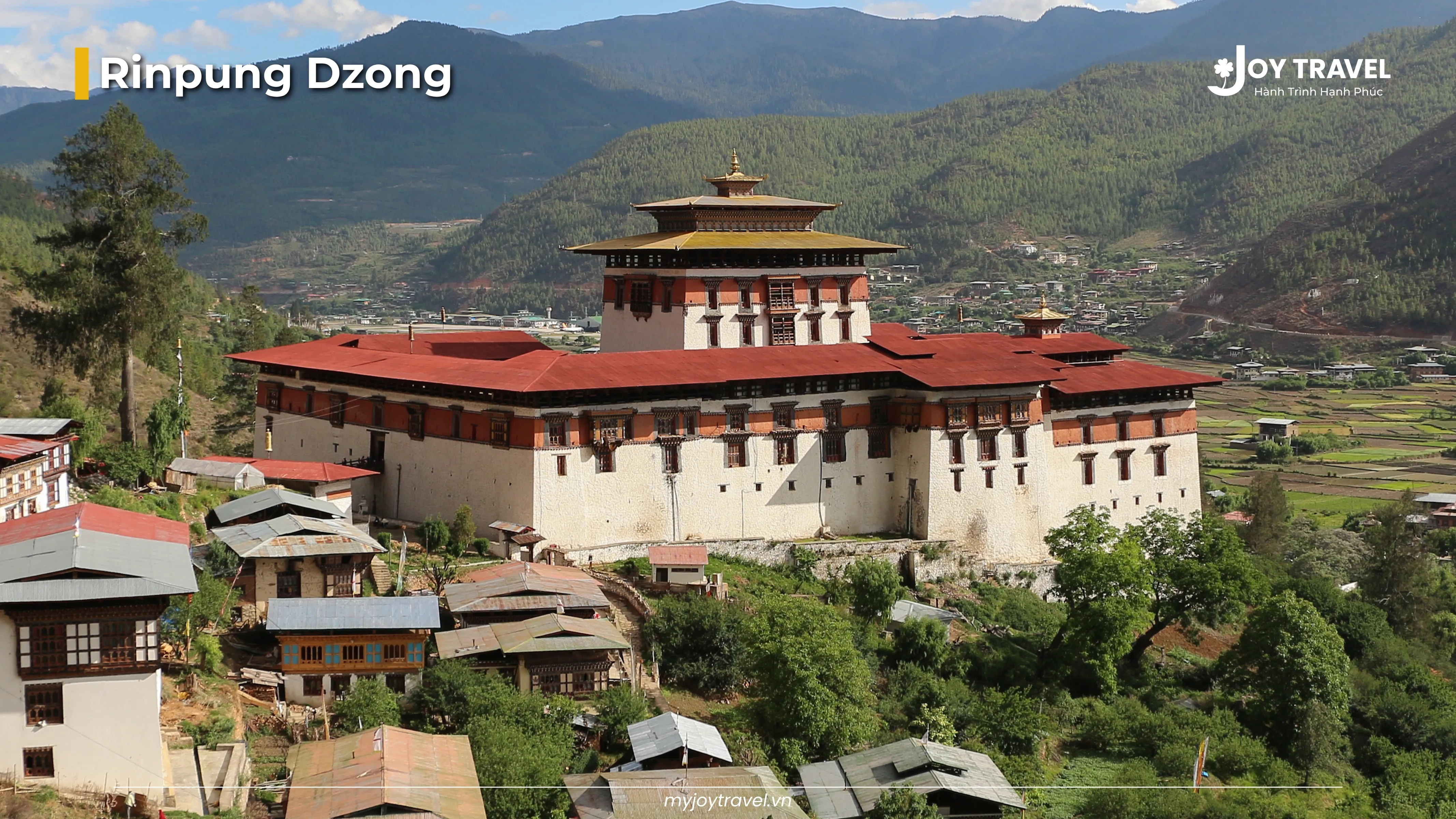
Rinpung Dzong, a 17th-century fortress perched on the hills of the Paro valley
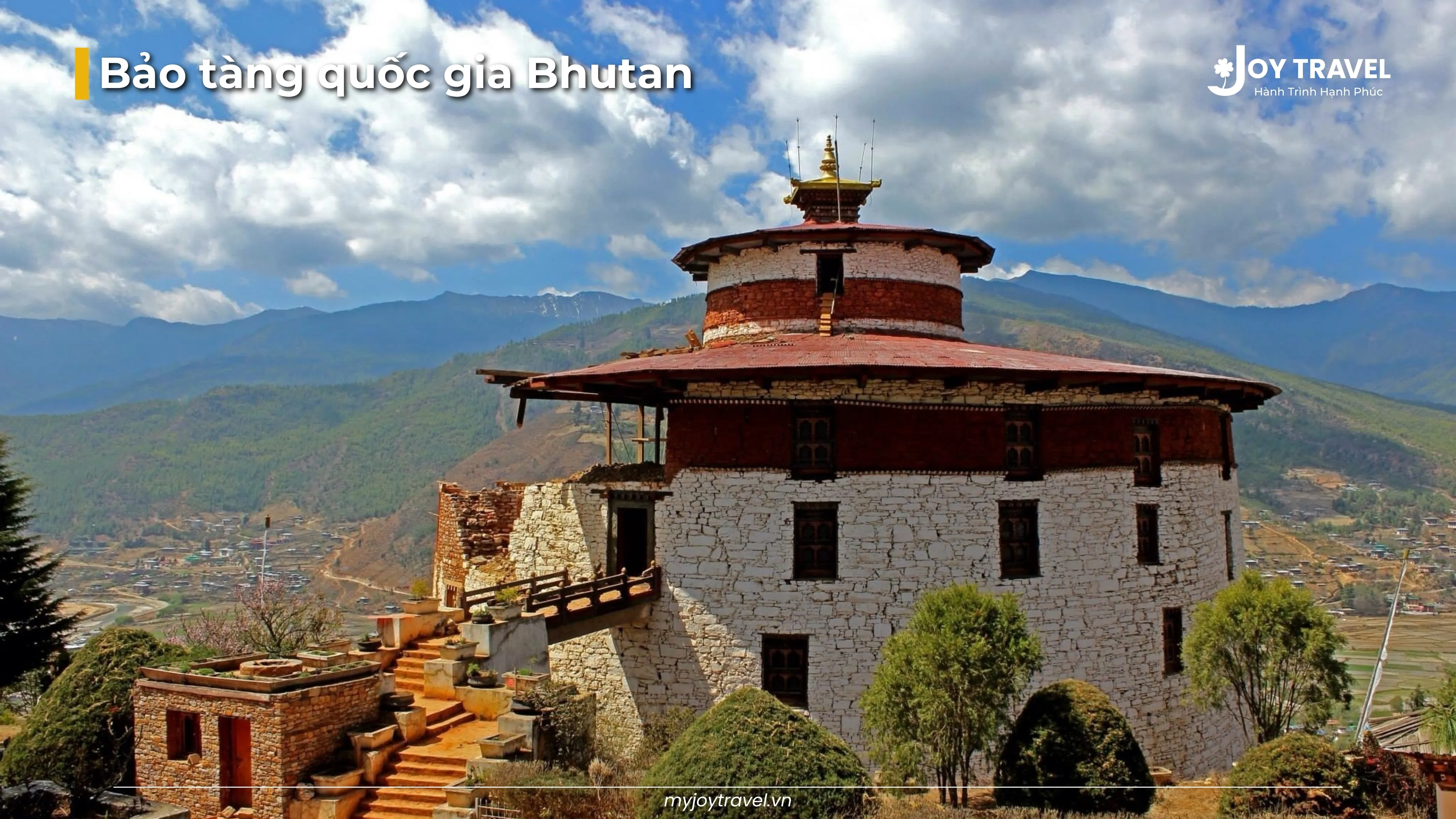
Paro National Museum houses Thangka paintings and Buddhist antiquities
Bhutan | A Place To "Return" To, Not To Go To
Travel to Bhutan will change the way you perceive happiness. Not because of the beautiful scenery, not because of the impressive architecture, but because here, an entire country has decided to put peace above speed. When you leave this land, what you bring back is not just a beautiful photo, but a silent reminder: slow down, breathe deeper, and know enough.
Are you ready for the journey to true happiness?
✓ Contact Joy Travel immediately to receive a personalized itinerary and free consultation!l to plan together Spiritual Bhutan tour comprehensive, professional and understanding of every sacred moment.
Hotline: 084 554 9369
Fanpage: Joy Travel - Happy Journey
Mail: outboundop@myjoytravel.vn