
Experience traveling to Korea in autumn 2026: Experience festivals, culture and red leaves
Fall is one of the most beautiful times to go to Korea, but it is also a season that easily leads to wrong expectations. Not every October has red leaves everywhere, not every famous spot fits every itinerary, and not every fall trip revolves around taking photos of yellow and red leaves.
A complete autumn trip to Korea should have three layers of experience: natural scenery, local culture and the unique autumn rhythm of Korean people.
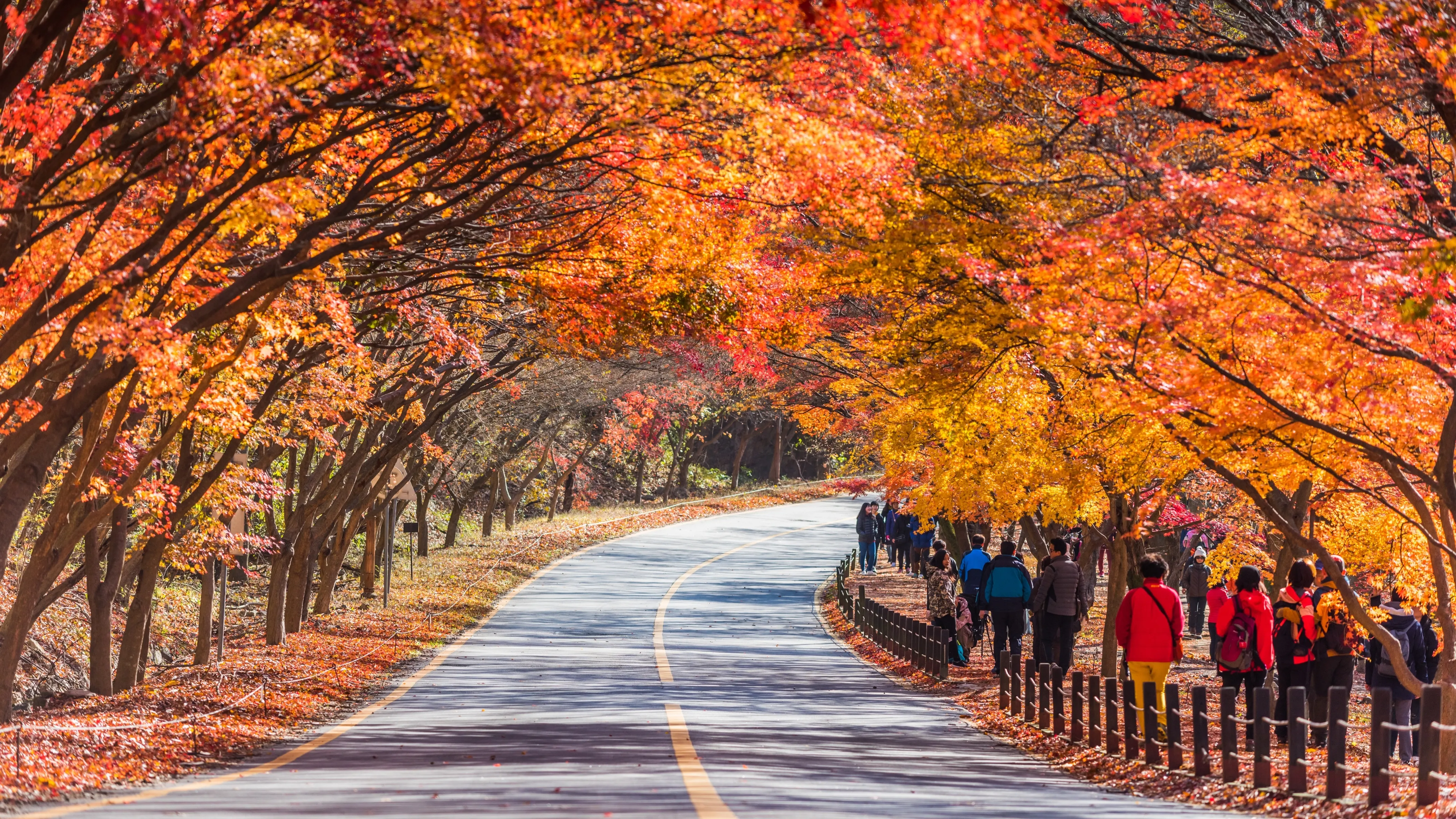
The bright maple leaf road is a familiar image of Korean autumn
Why is autumn one of the best times to go to Korea?
The weather is pleasant, the scenery changes clearly
After the humid heat of summer, Korean autumn brings cool temperatures, low humidity, and clear blue skies for most of the season. This is the ideal condition to move a lot, walk around and take photos outdoors without getting tired from the heat or erratic rain like summer. The transformation of nature from green to yellow, orange to red takes place clearly each week, creating the feeling that each trip has a different color.
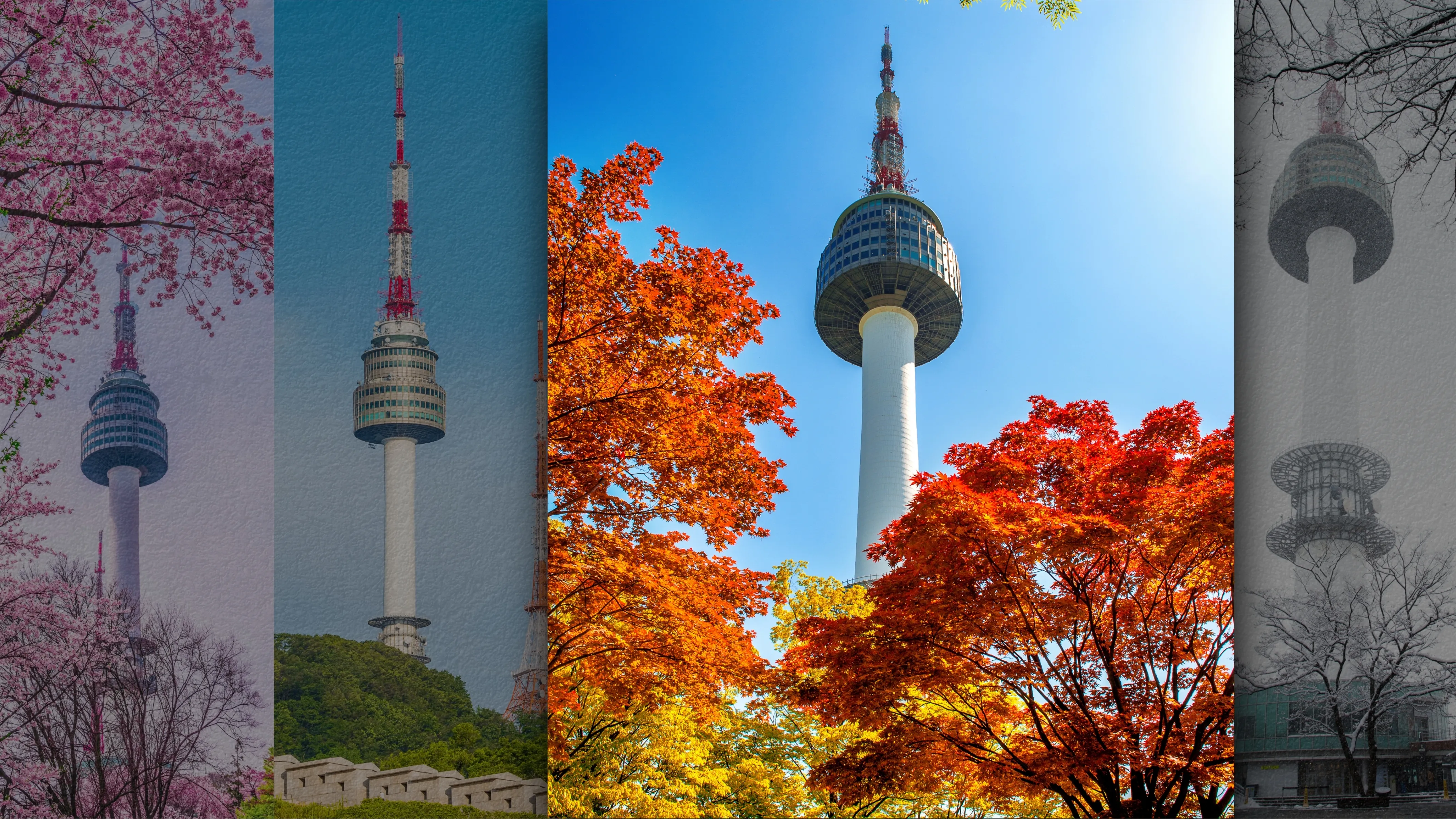
Namsan Tower takes on its characteristic red-orange color in autumn.
Korean autumn is not just about red leaves
Many people assume that Korean autumn is synonymous with red leaves, but in reality this is also the season of traditional festivals, the season of agricultural harvests, the season of seasonal dishes and also the time when ancient palaces and ancient villages become the most beautiful of the year thanks to the soft light and yellow leaf backdrop. If you only focus on hunting red leaves and ignore the cultural part, visitors will lose half of the most valuable experience of this season.
Why do Vietnamese tourists often like to go to Korea in the fall?
For most Vietnamese tourists, the tropical climate is hot and humid almost all year round, making the cold, dry feeling of Korean autumn a rare weather experience that cannot be found in the country. Not too cold like winter, not too hot like summer, autumn brings a pleasant feeling to all ages, including the elderly or children traveling with their families.
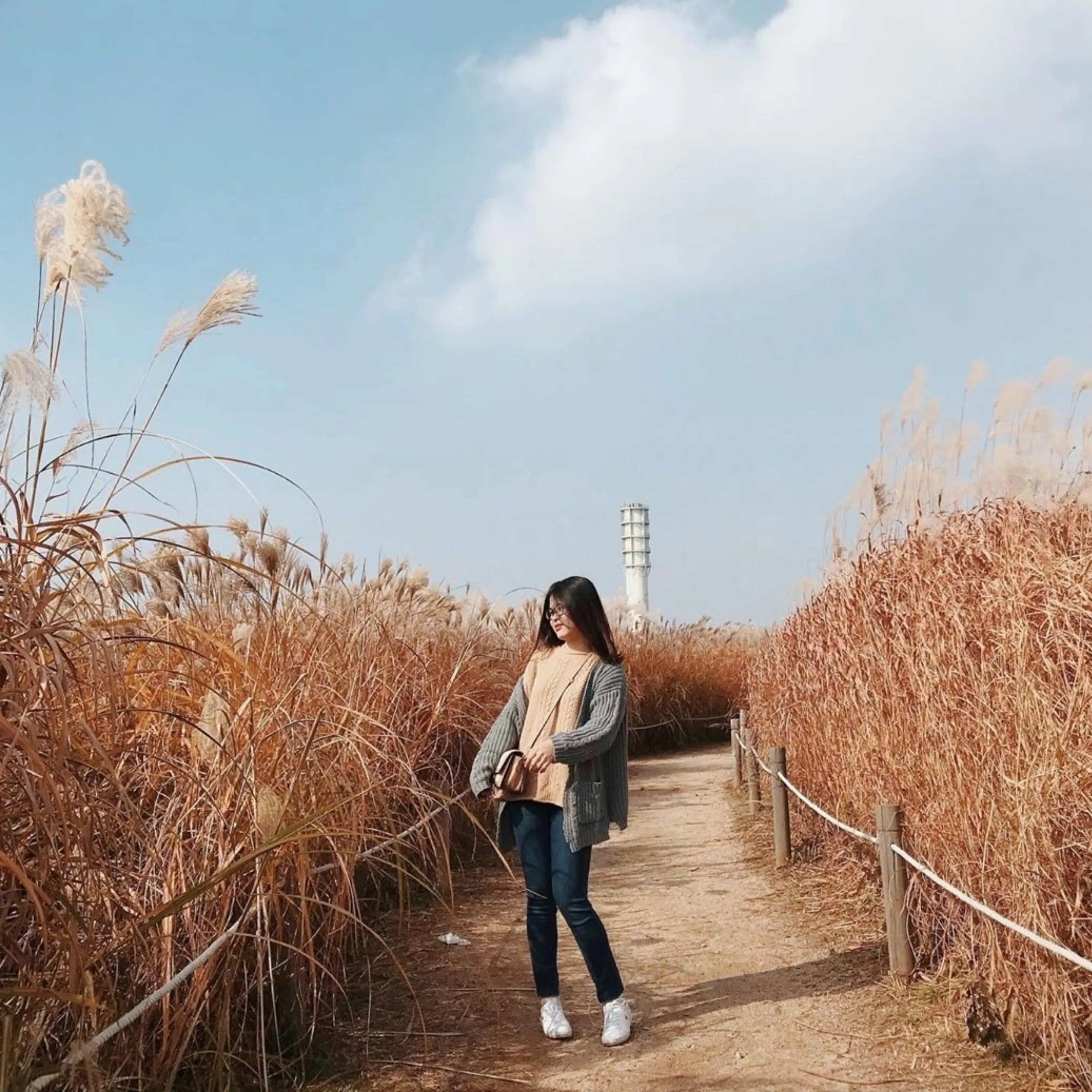
The golden reed grass fields are a typical experience of autumn
Besides the weather factor, Korean autumn also coincides with the domestic holiday period, especially September 2 and year-end holidays, making it easy for families and groups of friends to arrange trips without having to ask for long days off. This is also the time when students are still on vacation or not yet in the stressful exam period, which is convenient for families with young children.
In addition, autumn is also an ideal period to combine many purposes in one trip: both viewing natural scenery, experiencing cultural festivals, and being able to shop at major shopping centers without having to worry about inclement weather affecting the schedule. It is this diversity of experiences in a single season that makes autumn the top priority choice for many Vietnamese tourists when planning a trip to Korea.
What is the best month to travel to Korea in the fall of 2026?
September: Early autumn, the weather begins to be pleasant but it is not yet the season of bright red leaves
In early September, Korea still had some late summer sunshine but the humidity had decreased significantly. This is the time when the trees are just starting to turn color, suitable for those who want to avoid crowds and enjoy the early autumn atmosphere, but not the ideal choice if the main goal is to hunt for red leaves.
October: The time chosen by most people
October is the peak of Korean autumn, when maple and ginkgo leaves change color clearly from North to South, and is also the month where many of the biggest cultural festivals of the year take place. This is why October is always the month with the largest number of tourists, leading to tour and air ticket prices often higher than other months.
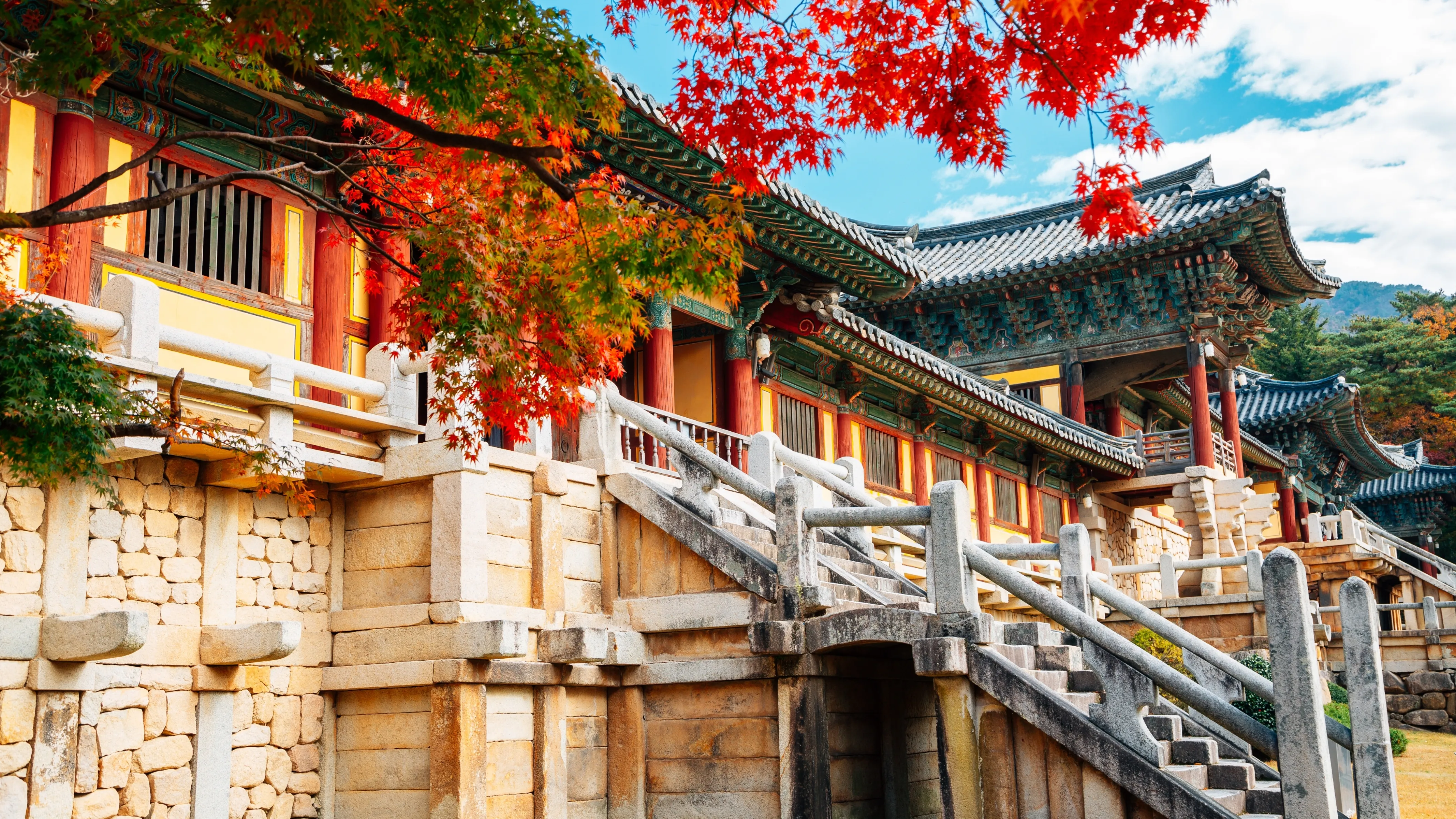
Bulguksa Pagoda, dressed in autumn's red leaves, is one of the places to see red leaves imbued with cultural and historical significance in Korea.
November: Still beautiful, but must choose the right spot
By November, the red leaves have gradually retreated to the southern areas or low mountainous areas, while in many places in Central and Northern Korea the leaves have almost completely fallen. Going in November can still see the full fall season if you choose the right destination, and at the same time take advantage of more affordable tour prices and air tickets because peak season is over.
So should we choose October or November?
If you prioritize experiencing the most brilliant red leaves and don't mind crowds, October is a safe choice. If you want to save money, avoid crowds and still want to see autumn leaves, November is a more reasonable option as long as you choose the right area with beautiful leaves. For guests traveling on a package tour, choosing a schedule that follows the red leaf route at the time of departure is much more important than just choosing by month.
Experience Korean festivals and culture in the fall of 2026
Chuseok Festival - Korean Mid-Autumn Festival
Chuseok is one of the most important holidays for Koreans, usually falling in late September or early October according to the lunar calendar. This is an occasion for local people to return to their hometowns, hold ceremonies to remember their ancestors and enjoy traditional dishes such as songpyeon cake. Visitors arriving on this occasion will have the opportunity to observe a very unique culture, although it should be noted that some services and shops may be temporarily closed during major holidays.
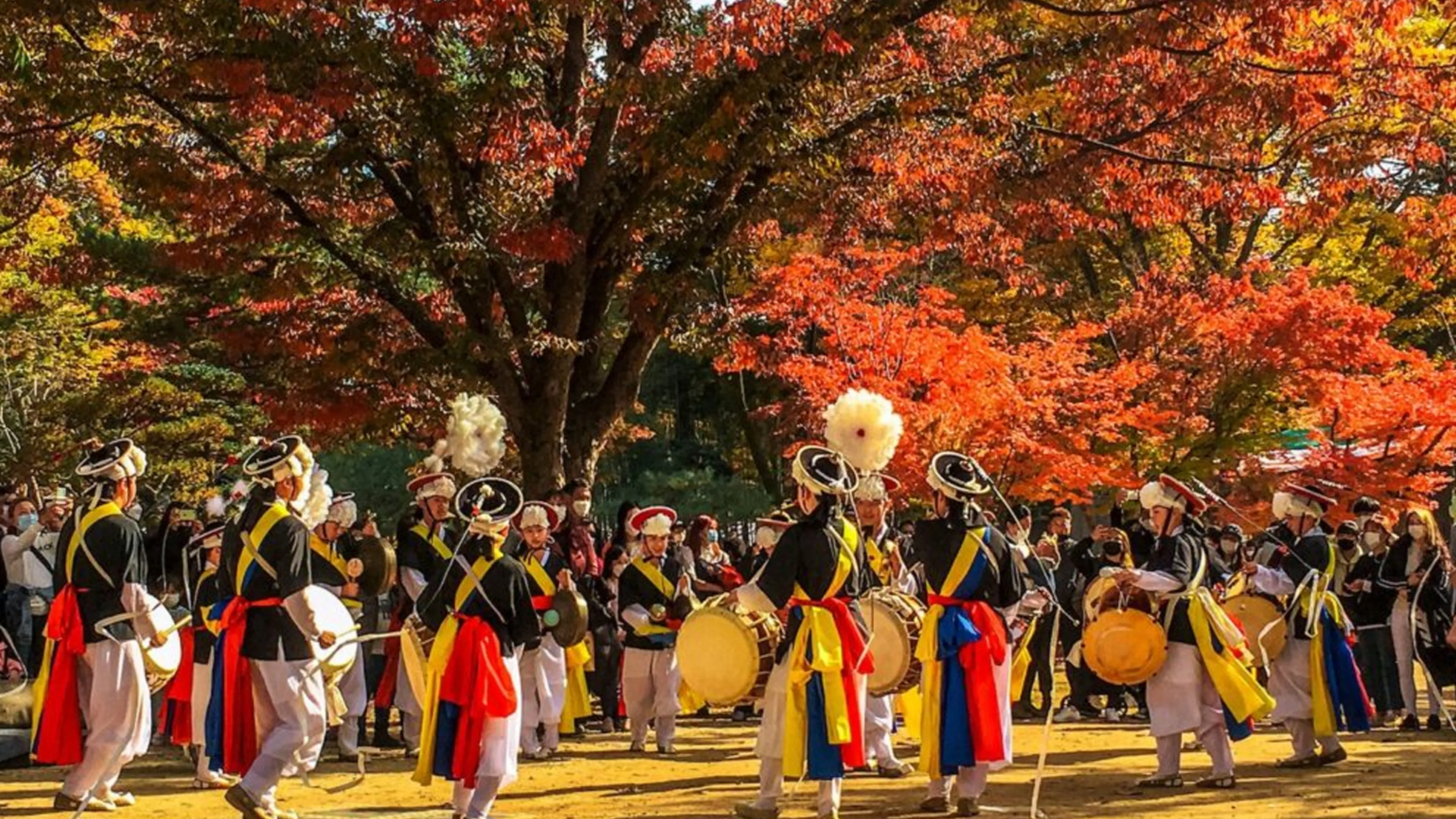
Traditional festival drum performances are often performed on the occasion of Chuseok
Jinju Namgang Yudeung Light Festival
Taking place along the Namgang River in Jinju city, this lantern festival turns the entire river into a sparkling space with thousands of colorful lanterns floating on the water in the evening. This is one of the most popular light festivals in Southern Korea in the fall.
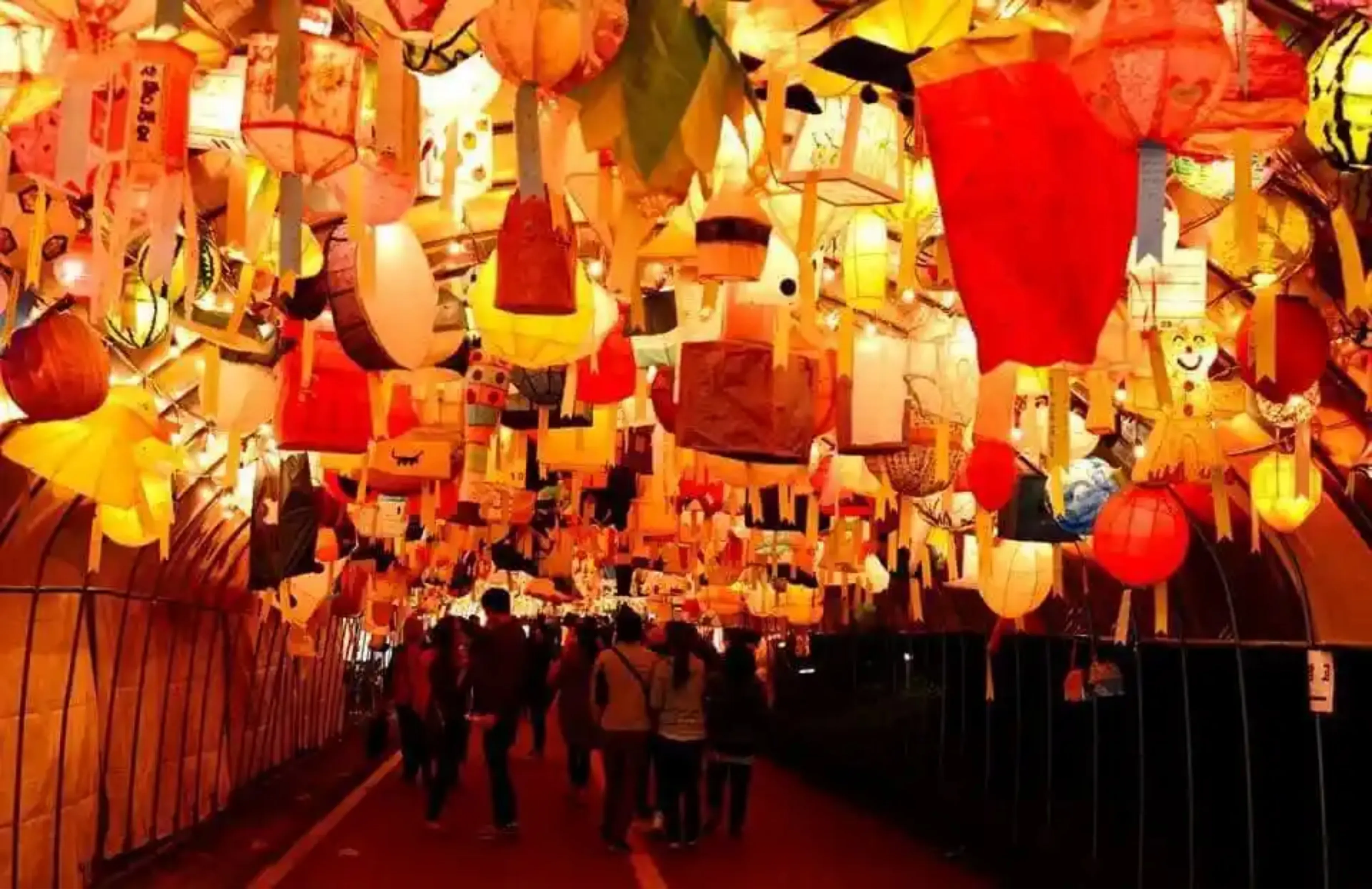
Thousands of brilliant lanterns light up the entire corner of the festival at night
Andong Mask Dance Cultural Festival
Andong is a land famous for its Confucian tradition and folk mask dance art. The Mask Dance Festival here brings together many art troupes to perform traditional mask dances, combined with cultural experience activities in the nearby Hahoe ancient village.
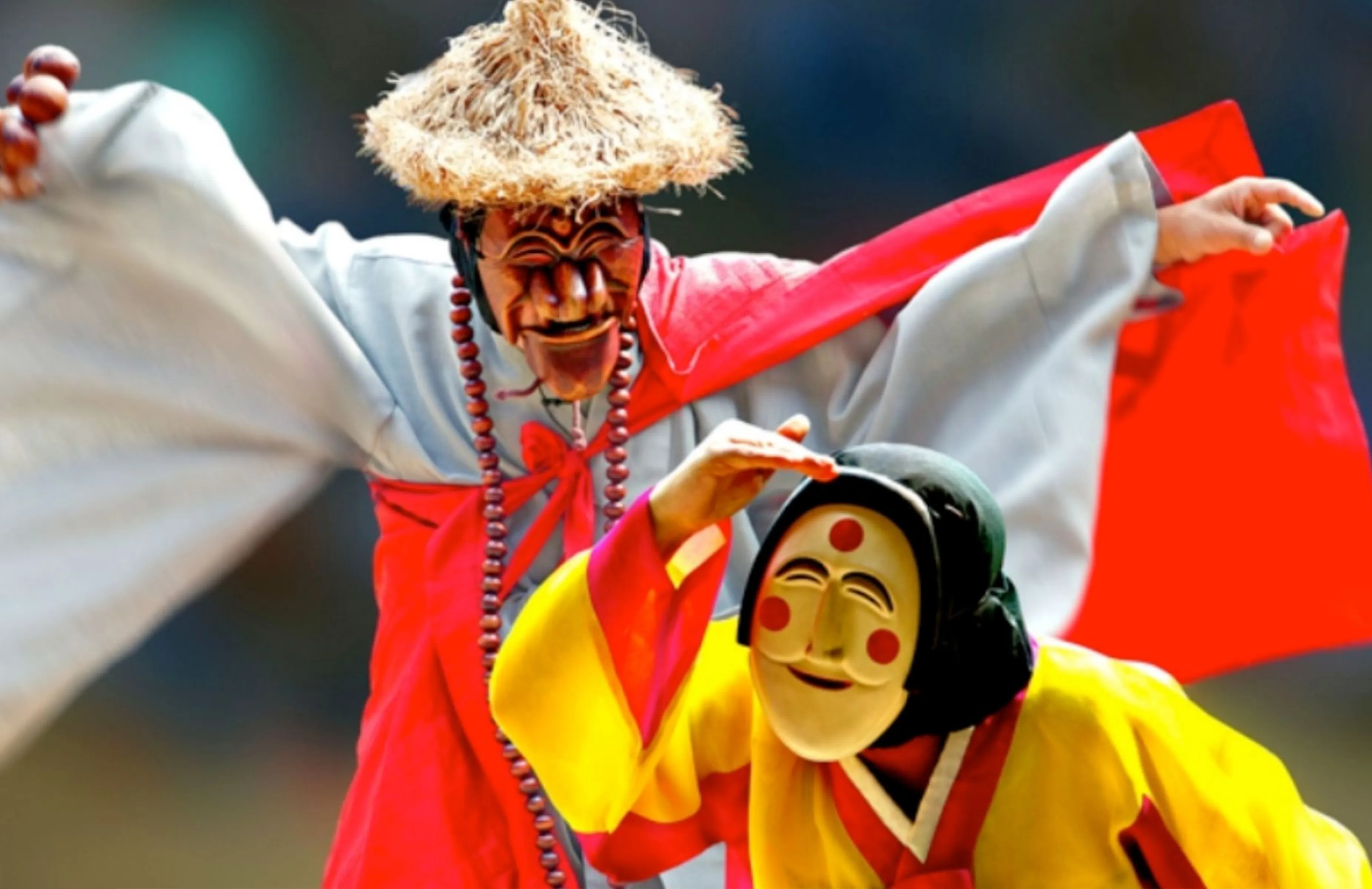
The traditional art of mask dance is the soul of Andong cultural festival
Yeongdong Wine and Grape Festival
Yeongdong is a famous wine growing area of Korea, where a wine festival takes place every fall. Visitors can participate in grape picking, learn about the domestic wine making process and enjoy locally produced wines.
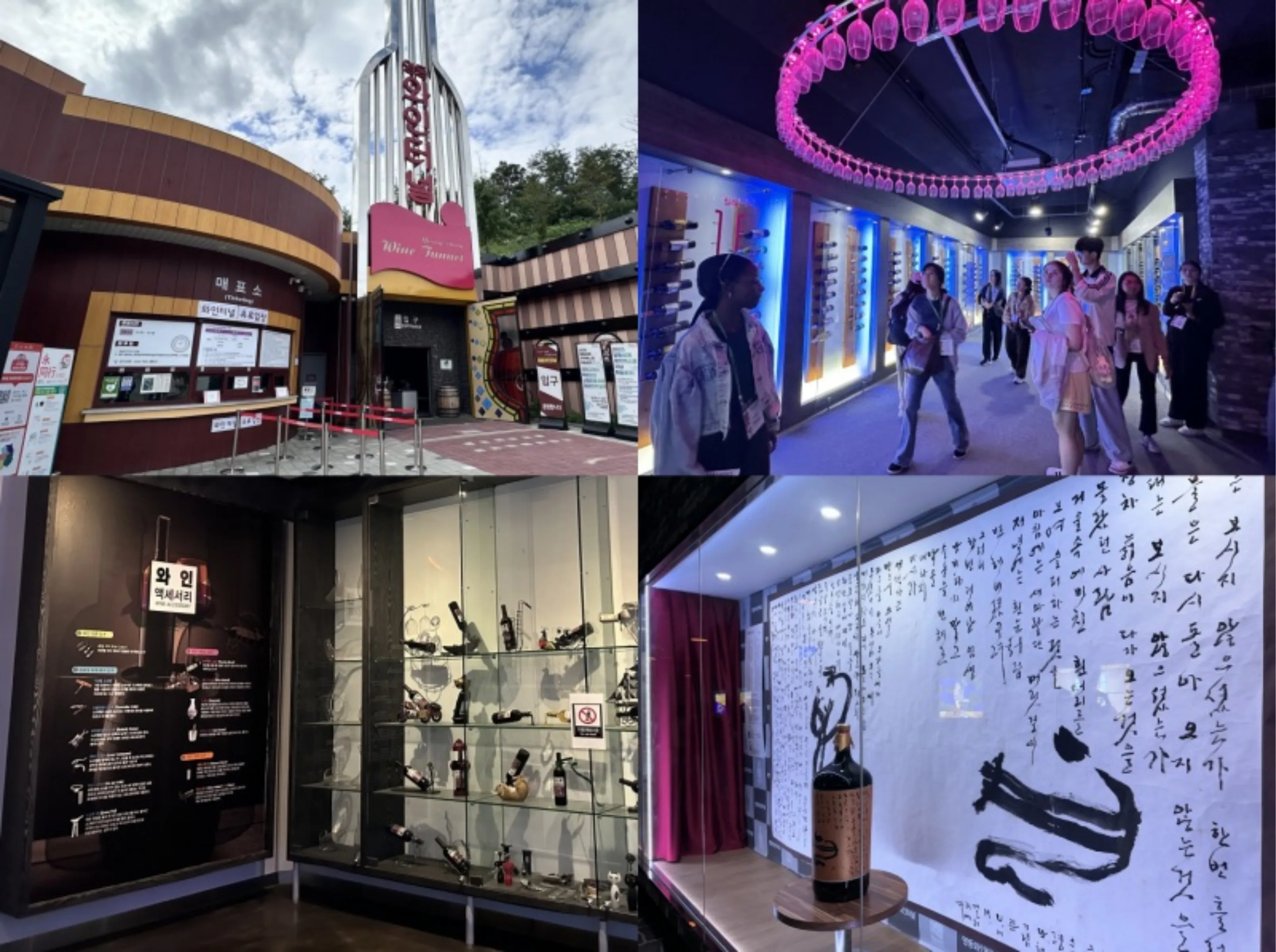
Yeongdong Wine Cellars is a unique destination to learn about the Korean domestic wine making process
Red leaf festival in Seoraksan
Seoraksan is one of the most beautiful mountains in Korea, and the red leaf festival here attracts a large number of domestic and foreign tourists every fall. The majestic mountain scenery covered in red and orange colors creates one of the most iconic images of Korean autumn.
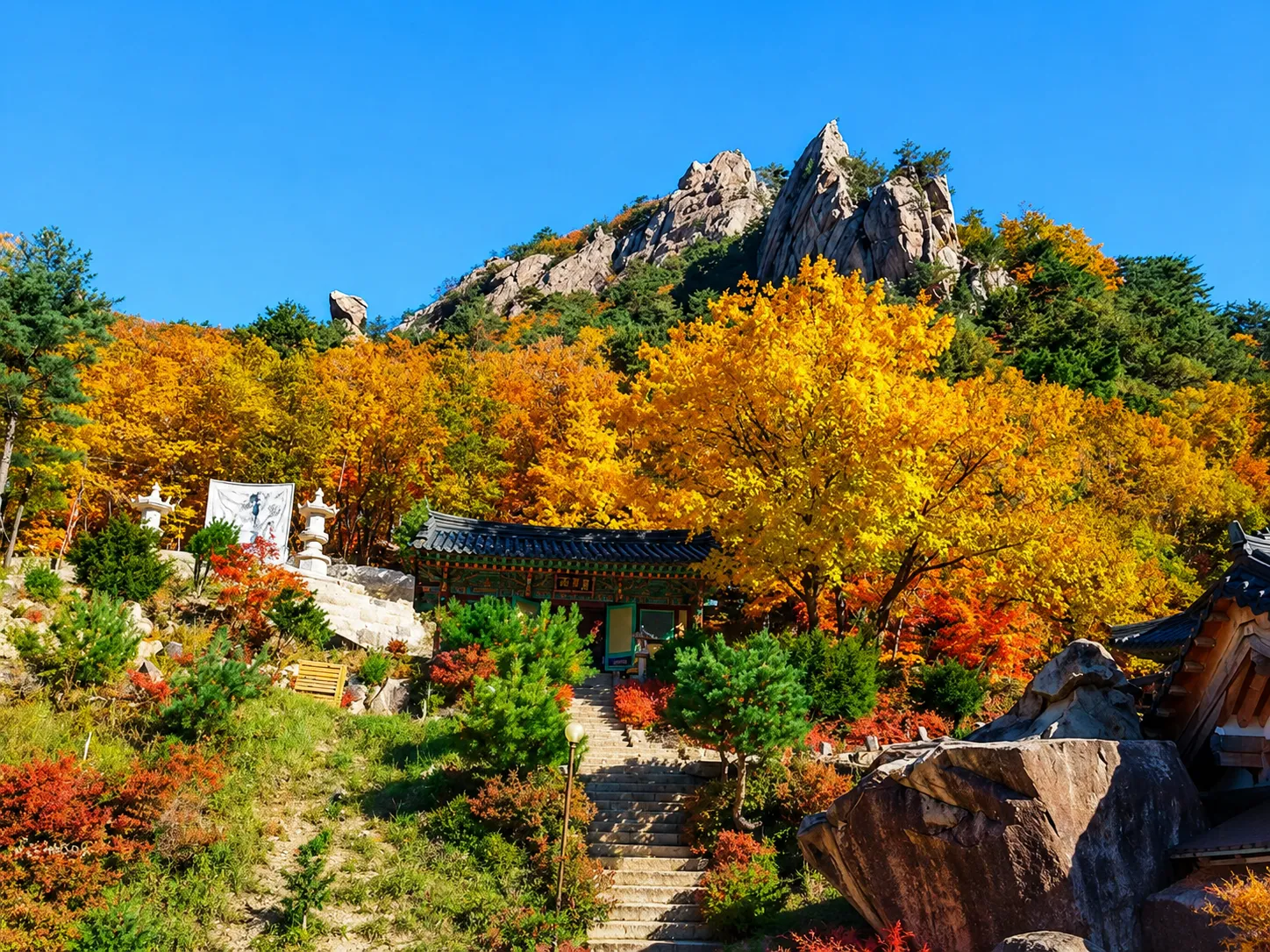
Panoramic view of Seorakan mountain when entering the red leaf season
An experience not to be missed when traveling to Korea in the fall
Wearing Hanbok amidst the ancient scenery of the red leaf season
Wearing a traditional hanbok and walking in ancient palaces such as Gyeongbokgung or Bukchon ancient village in the fall is an experience loved by many tourists, both cultural and creating impressive photos with yellow leaf backdrops and ancient tiled roofs.
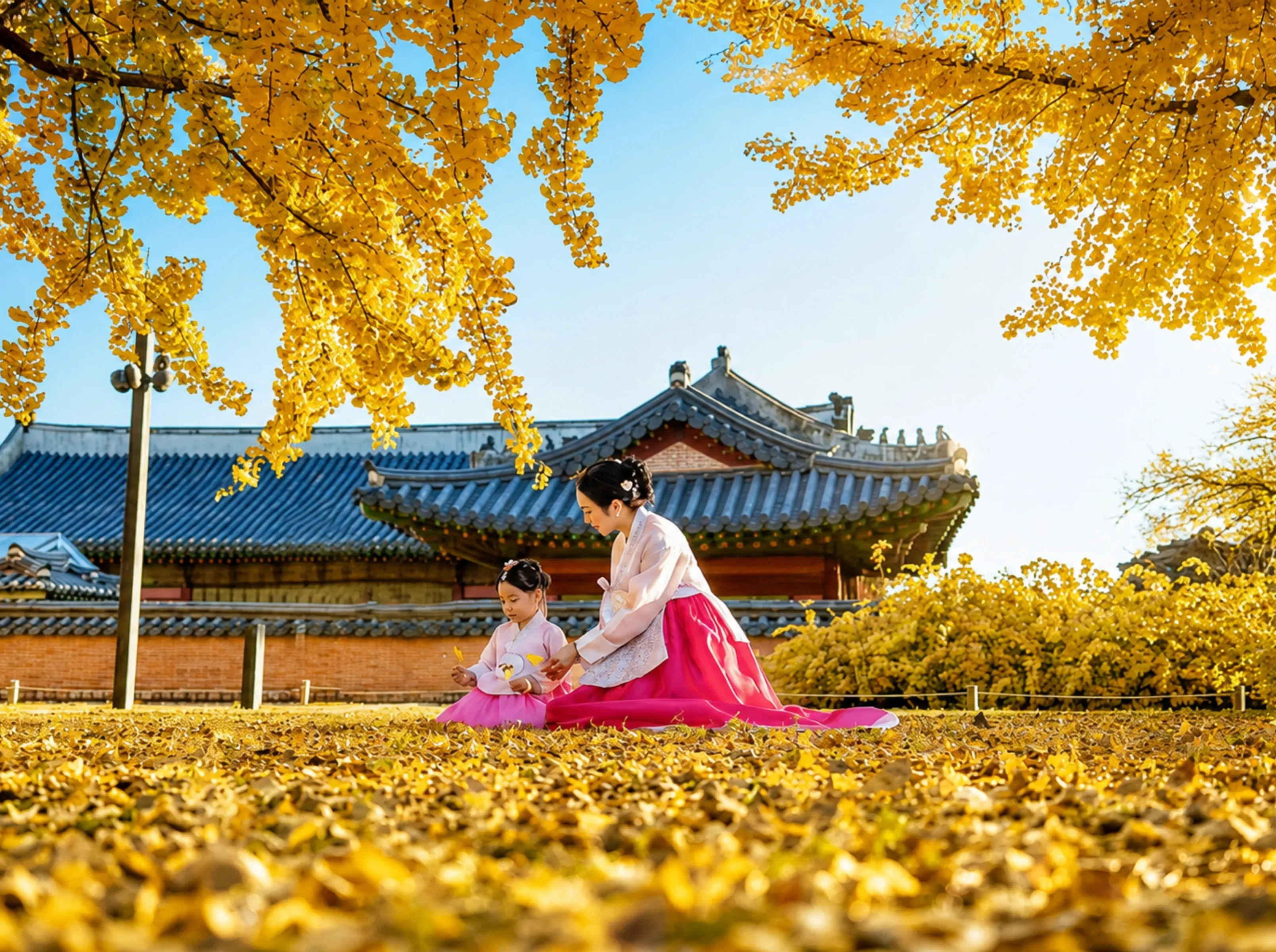
The warm moment beside the yellow leaf carpet is one of the memorable images
best of the trip
Enjoy autumn cuisine full of quintessence from heaven and earth
Fall is also the harvest season for many Korean agricultural products, from chestnuts, roasted sweet potatoes, to warm seafood hot pot dishes suitable for cold weather. This is the ideal time to explore local cuisine in season.
Watch the sunset at ancient palaces
The soft light of autumn makes sunset at the palaces much more special than other seasons of the year, making it an ideal time to take photos or simply take a relaxing stroll after a day of sightseeing.
Cruise by train to see the red leaves at Gangchon or O-train
Slow trains weaving through mountain roads covered with red leaves are a unique experience only available in the fall, allowing visitors to enjoy the scenery on both sides of the tracks without having to move much.
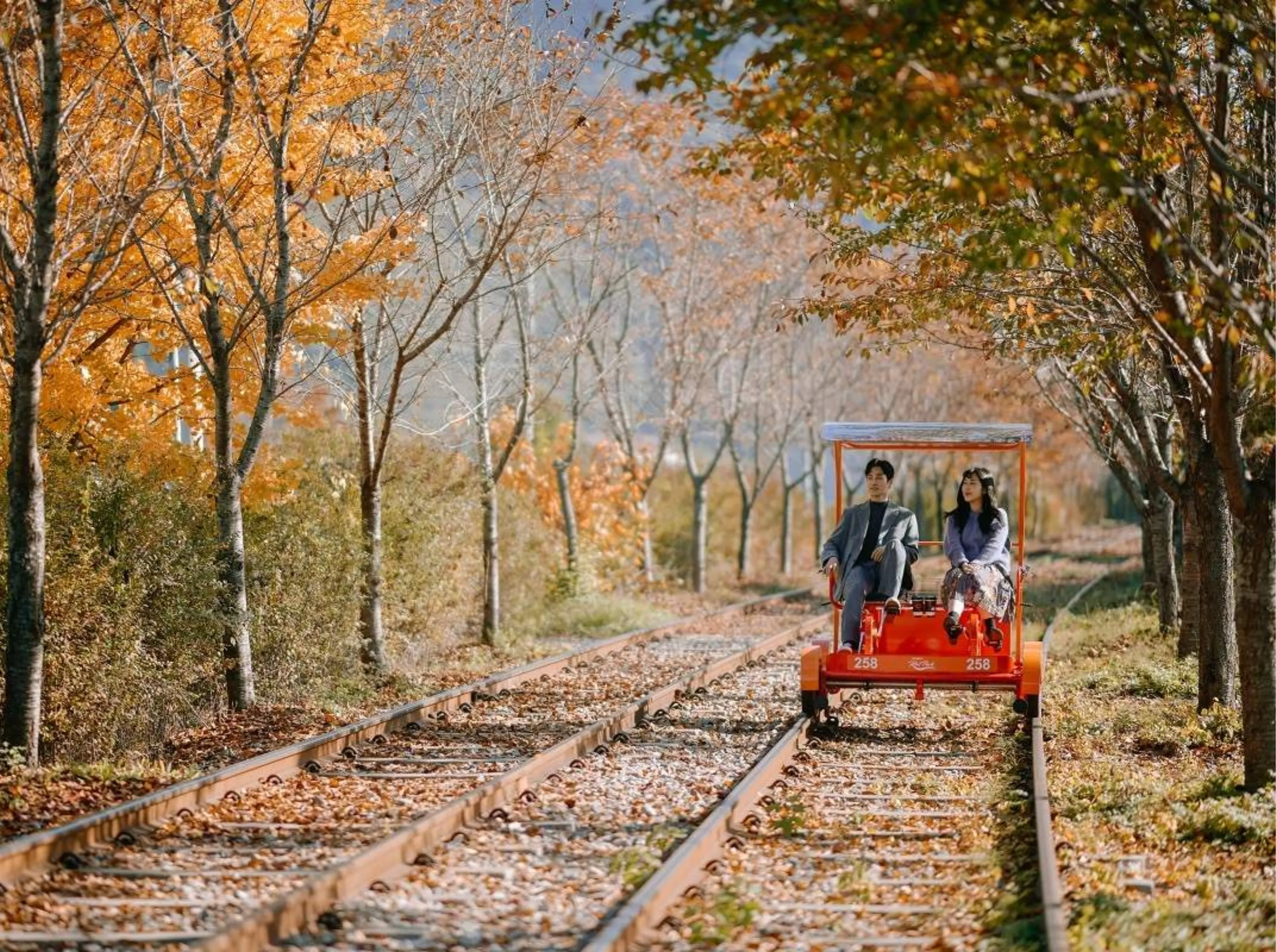
Experiencing a rail bike through rows of red-leafed trees is an activity loved by many couples
Shop for fall produce and souvenirs at festivals
Fall markets and festivals often sell many seasonal local products and handmade souvenirs, making them a good opportunity to buy gifts for loved ones after the trip.
Common mistakes when going to Korea in the fall
Think that every October there are beautiful red leaves everywhere
This is the most common misconception of first-time visitors to Korea in the fall. The actual time the leaves change color depends on the temperature, altitude and latitude of each region, not a fixed time that applies to the whole country. Red leaves often appear early in the northern high mountains such as Seoraksan, then gradually spread to lower and southern areas such as Naejangsan or Jeju Island, sometimes up to 3-4 weeks apart.
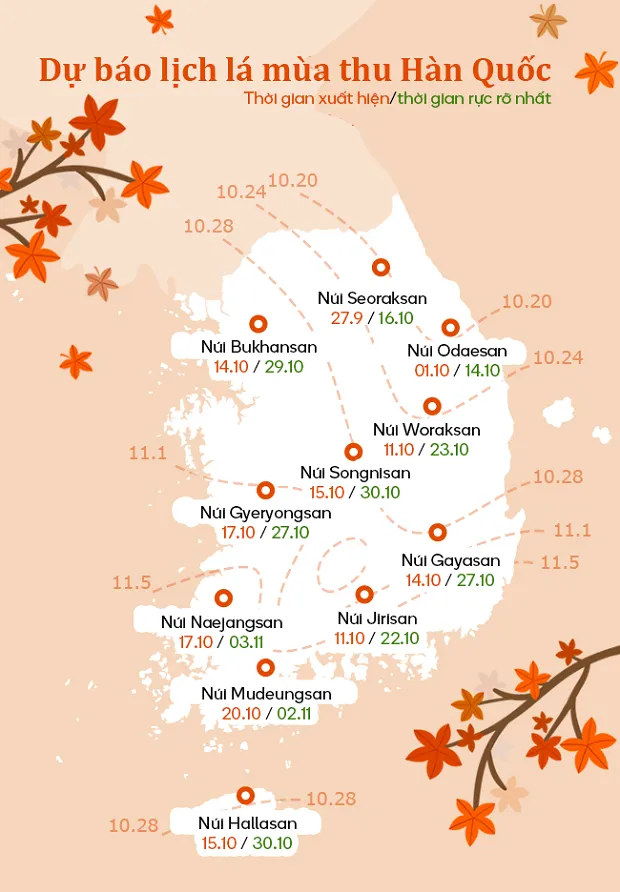
Korean red leaf season forecast calendar 2026
Besides, the weather is different every year. There are years when the weather gets cold early, causing the leaves to change color a week before expected. There are also years when the warm weather lasts longer, causing the leaves to stay green longer than usual. Therefore, simply choosing to go in a "beautiful month" according to general experience without finding out the actual leaf condition at the correct destination in the itinerary can easily lead to disappointment when arriving at a place where the trees are still green or the leaves have mostly fallen.
Choose a tour with too many destinations
The mentality of wanting to "go for value for money" makes many tourists tend to choose itineraries that cram as many landmarks as possible into a short trip. In fact, this is often counterproductive: travel time between destinations takes up most of the day's time, leaving each attraction with only a few dozen minutes to take photos and then get back on the bus to move on.
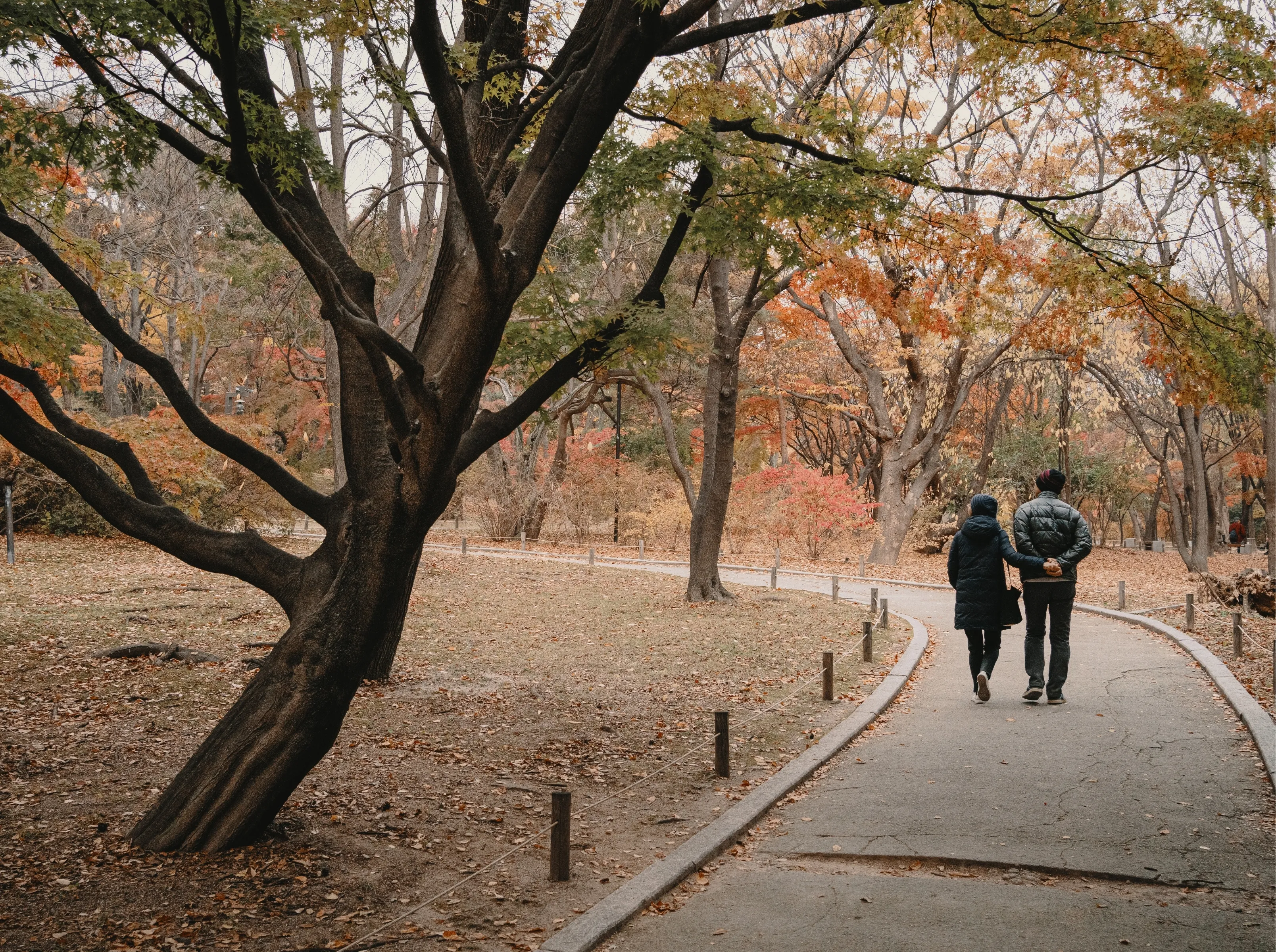
Strolling slowly among the scenery of autumn red leaves brings a sense of peace
As a result, visitors do not have enough time to really feel the space, especially in places that require slow walking and sightseeing such as red leaf parks, ancient villages or riverside areas. A quality fall itinerary should prioritize a moderate number of spots but enough time to fully experience it, instead of trying to "check-in" as many places as possible.
Just look at the promotional photos without seeing the actual schedule
A photo of brilliant red leaves on social networks or in tour advertisements may be taken at a rare time of year, even if it only lasts a few days at that location. Using this image as a basis for expectations for an entire tourist season is unrealistic.
Before booking a tour, visitors should proactively ask for specific departure dates, actual destinations in the itinerary and leaf condition at that time, instead of just relying on general promotional illustrations. A reputable travel agency will be willing to provide updated information on leaf condition with each departure instead of just offering the best image ever taken.
Not preparing appropriate clothing
Many first-time visitors to Korea in the fall often underestimate the difference in temperature during the day. Early mornings and evenings can be quite cold, especially in mountainous areas or when outdoors for long periods of time, while midday can be quite warm in the sun. This difference is much more obvious than the Vietnamese climate, causing many people to subjectively not bring enough warm clothes.
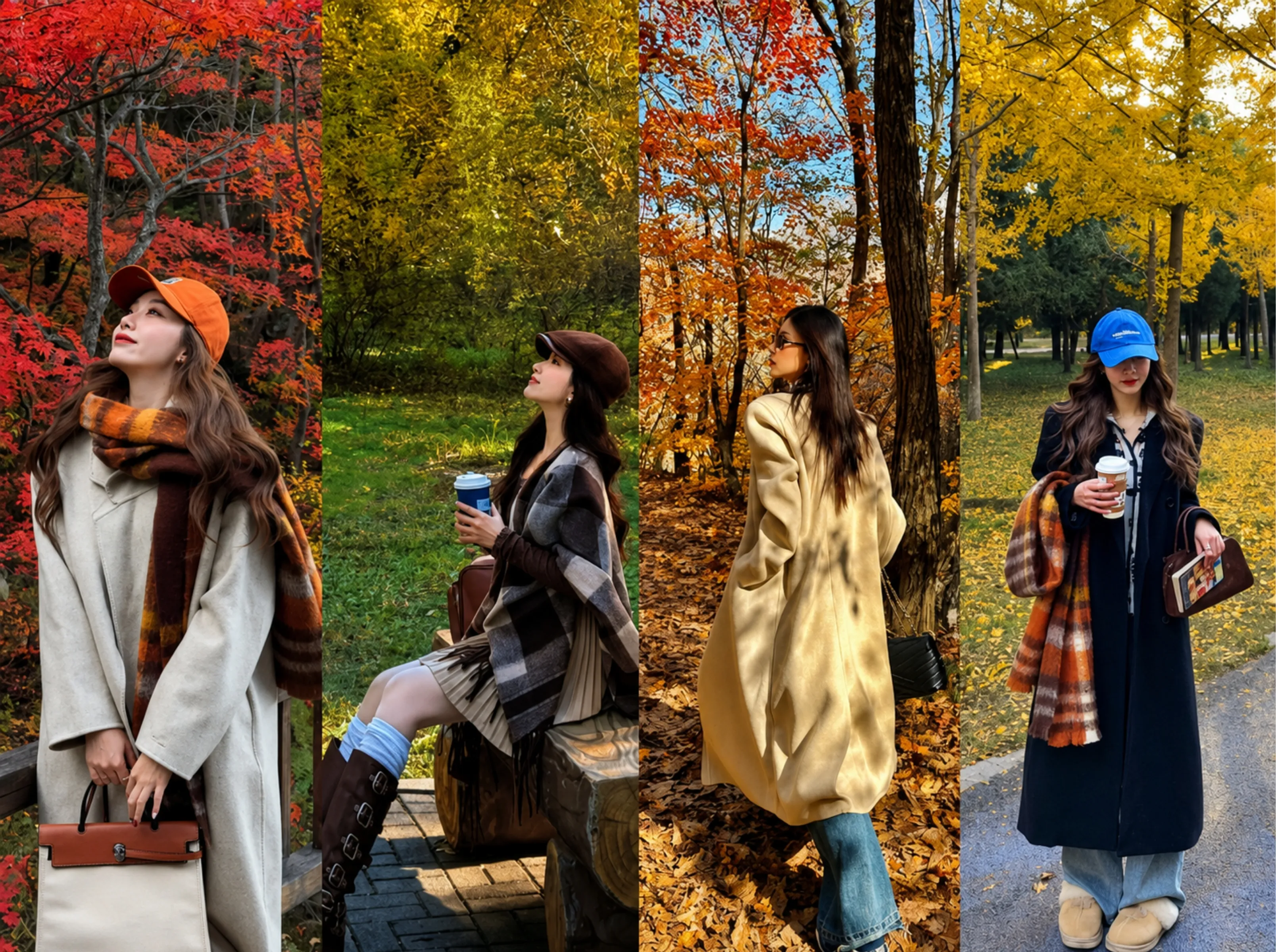
Combining warm, multi-layered clothes is the ideal choice to both keep warm and look beautiful amid the red leaf landscape
The proper way to prepare is to wear clothes in layers that can be easily taken off or added depending on the time of day, and bring a light jacket to keep warm. This is especially important for groups with the elderly or young children, because the bodies of these two groups are often more sensitive to sudden changes in temperature.
Experience in choosing a Korean tour in fall 2026
Prioritize a sufficient schedule, do not rush points
A reasonable schedule needs to have a balance between the number of attractions and time to rest, eat, and travel. Instead of considering the number of landmarks on the itinerary as a measure of the value of the tour, visitors should consider the actual time spent at each destination: is there enough time to fully tour on foot, or just get off the bus to take a few photos and then move on.
Especially with red leaf viewing spots such as parks, mountains or ancient villages, the experience is only truly complete when visitors have time to walk slowly, sit and rest or find a satisfactory angle to take photos. A sufficient schedule, even with fewer points, often brings much higher satisfaction than a packed but rushed schedule.
Don't just ask the price, ask if the schedule is in season
In the psychology of choosing a tour, price is often the first factor of concern, but with autumn tours, this should not be the only criterion. A tour with a good price but departing at the wrong time when the leaves are beautiful at the main attractions will make the actual experience not as expected, no matter how economical the cost.
When researching tours, tourists should proactively ask the travel agency about the specific departure date, the leaf condition at each attraction at that time, as well as practical experiences from previous tour groups in the same time frame. This is an effective way to evaluate whether the tour is really suitable for the goal of seeing autumn or not, instead of just relying on the listed price.
Choose a tour according to the group of guests accompanying you
Each group of guests has different experience needs, so a schedule that suits everyone is often difficult to bring maximum satisfaction to each specific group. Families with young children often need a light schedule, less travel during the day and flexible rest time. Older groups should prioritize accessible attractions, limit climbing or hiking, and need conveniently located hotels.
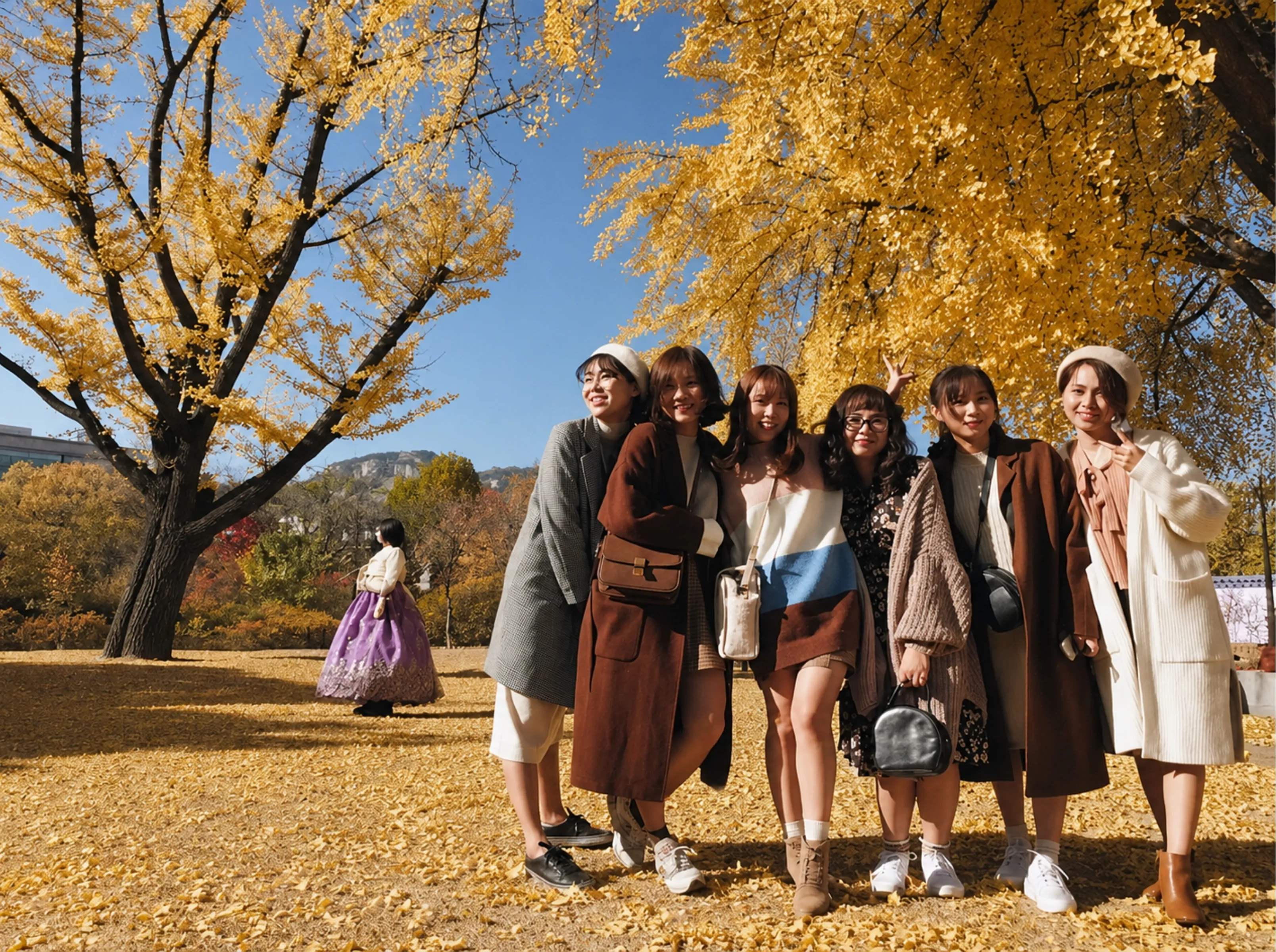
A complete autumn trip is always more beautiful when accompanied by people with similar tastes
Groups of couples often want to have more free time to explore at their own pace, instead of traveling in large groups. Meanwhile, high-end tourist groups often put the quality of service, hotel and private experience first, willing to trade the number of attractions in exchange for comfort and thoughtfulness in every detail. Clearly identifying the group of guests traveling with you before choosing a tour will help find a truly suitable schedule instead of a general program.
What should a good fall tour program include?
Overall, one tour autumn Quality should combine three core elements.
Firstly, the typical red leaf viewing spot is chosen according to the departure time, not a general famous place without taking into account the actual condition of the leaves.
The second is at least one cultural experience or local festival, helping the trip go beyond just sightseeing and bring depth to the experience.
Third, and also an often overlooked factor, is a reasonable travel schedule, not cramming too many attractions in one day, making visitors tired and unable to fully experience each destination.
When all three of these factors are well balanced, a fall trip will leave a much deeper impression than an itinerary that focuses solely on the number of destinations.
KOREAN AUTUMN DISCOVERY PROGRAM
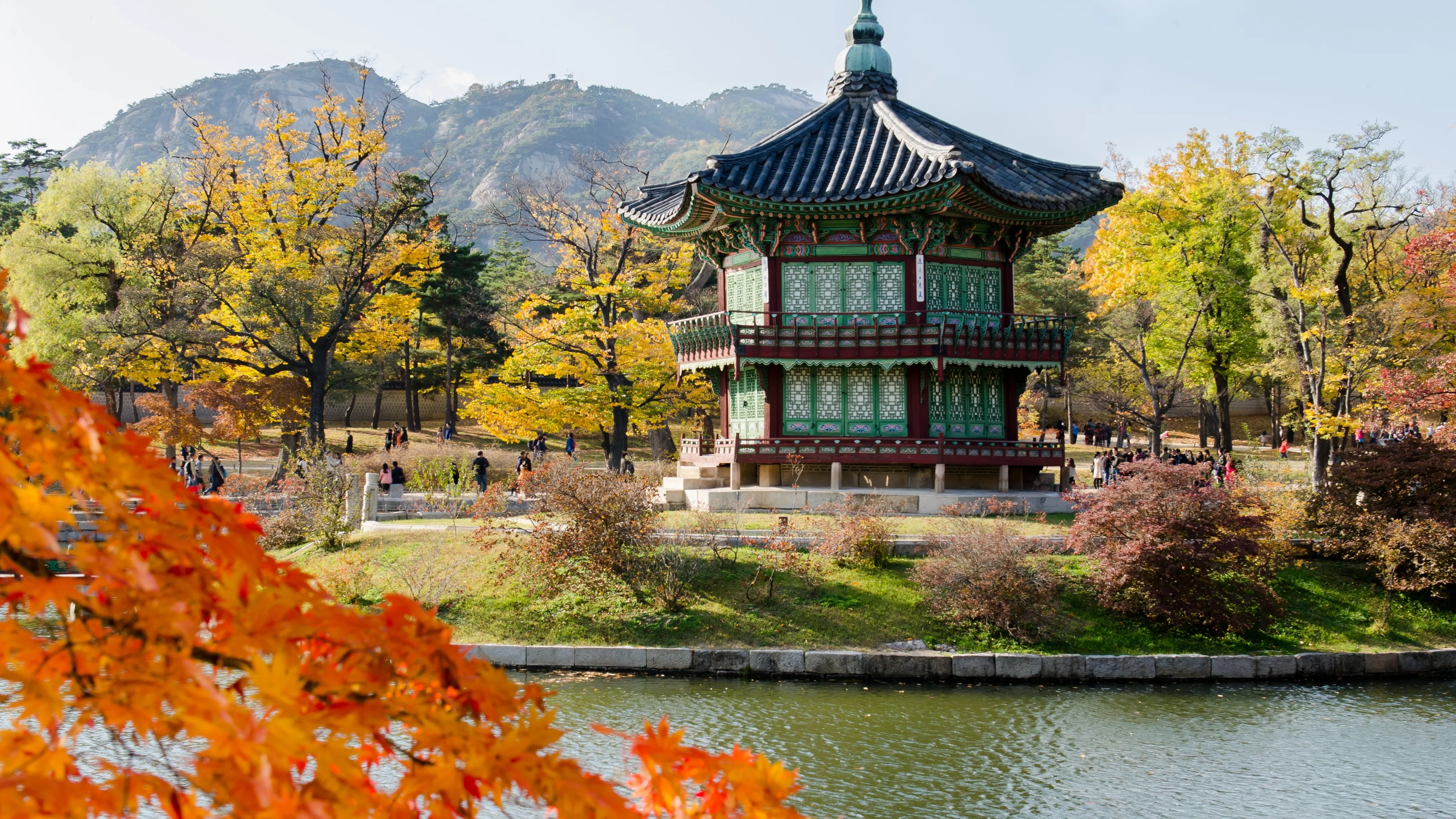
Korean autumn is most beautiful when you choose the right time and the right way
Korean autumn is more than just photos of red leaves. It's the feeling of walking under ginkgo trees, wearing hanbok in the middle of an ancient palace, enjoying hot food in chilly weather, visiting a local festival or simply sitting in a cafe watching the city change seasons.
If you are planning a trip to Korea in the fall of 2026, don't just choose a tour based on price or advertising photos. Choose according to the time, route, travel rhythm and experience style that suits your companion.
___________________________________________________________
BOOK A TOUR TO EXPLORE KOREA AUTUMN!
You are planning to travel to Korea in the fall of 2026 but don't know whether to go in October or November, choose Seoul - Busan or combine Suwon, Gyeongju, Nami?
Explore now Korean Autumn Discovery tour program by Joy Travel — the itinerary is built at the right time when the leaves are beautiful, combining cultural experiences and typical festivals, suitable for families, elders, couples and groups of friends.
Or see more Hanoi - Busan - Gyeongju - Seoul tour without shopping if you want to combine multiple cities in the same trip.
This is the ideal choice for families, couples, groups of friends, business customers or those who want to turn trips into memorable milestones.
Contact Joy Travel today to receive it Free 1:1 consultation and reserve your spot early with 50% deposit.
Hotline: 084 554 9369
Fanpage: Joy Travel - Happy Journey
Mail: outboundop@myjoytravel.vn